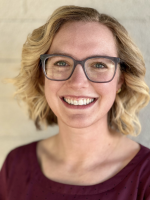
About the Guest:
Tim Lambert is the Multimedia News Director at WITF. He is a six-time recipient of the Radio Television Digital News Association’s (RTDNA) National Edward R. Murrow Award for excellence in digital and broadcast journalism and serves as one of four national coaches for the Trusting News project. Tim’s reporting has also been honored on the state, regional and national levels.
Episode Transcript:
Leah Dajches: It reads almost like a horror movie. A mysterious dark cloud is creeping across the country, swallowing entire organizations in its path. Its prey of choice, local news outlets. As we'll learn in this episode of News Over Noise that insidious cloud is not a single super villain, but many smaller minions laying siege to the valuable yet vulnerable institution that is local journalism. The business models that have sustained news outlets in the past have been made obsolete by the advent of digital content and the ad money it can generate. Declining revenue and layoffs aren't the only challenge facing local news. Many outlets have been consolidated through mergers and acquisitions. The decrease in independently owned outlets means less or even no reporting on the community news and events that have kept local papers relevant. It also means that the future of individual papers, as well as the communities where they're located, are increasingly in the hands of owners with no direct stake in the outcome of their reporting. I'm Leah Dajches.
Matt Jordan: And I'm Matt Jordan.
Leah Dajches: And we're the hosts of News Over Noise.
Matt Jordan: On this episode, we're going to be talking about what's at stake as these local companies buy news outlets and strip them for parts. Spoiler alert, it's a lot, because local news has a profound impact on our communities. We know that consuming quality local news that places stories and context for the communities where we live, has a direct impact on civic engagement. People vote more. People get engaged in their communities more and people trust each other more. And when a local news source closes, those things decline. But even more importantly, for our ability to hear news that matters through the noise, we know that quality local journalism is one of the best antidotes to divisive national narratives that stoke polarization. People reading about people they know and hearing about solutions to the problems they understand, helps us listen better. It helps us build better, more responsive communities.
Leah Dajches: So what does this all mean for you? To find out, we're going to talk with Tim Lambert. Tim is the multimedia news director at WITF in Harrisburg, where he also hosts Morning Edition. He is a six time recipient of the Edward R. Murrow Award for excellence in digital and broadcast journalism, and served as one of four national coaches for the Trusting News Project. Hi Tim, welcome to News Over Noise.
Tim Lambert: It's so great to be here. Thank you.
Leah Dajches: Yeah, so let's get right to it. Is local news dying?
Tim Lambert: That is the $100,000 question, I think. It appears to be at this point, when you take a look at the media landscape, especially in Pennsylvania. I think you're seeing a contraction in the industry where news organizations are cutting resources more and more. That means there are less reporters on the ground, we call boots on the ground, getting into communities and covering events, covering government meetings. So right now, if it's not dying, it may be entering the life support stage.
Matt Jordan: Would you call this a zombie phase? I mean, are we looking at communities looking to their local news and seeing them being there, but they're not really alive?
Tim Lambert: I think communities are trying to figure out what exactly news organizations are trying to do. I've heard complaints from people who have community newspapers, whether it's in Chambersburg or Lebanon. I have friends in those communities and when they look at their newspaper, they see stories from York or they see stories from USA Today. These are Gannett owned properties and they're wondering, where's the news about my community? So I think news organizations have done a poor job in being transparent with their readers about changes they've made. No one ever wants to admit they're doing a reduction, right? We're cutting back, but we want your subscription money. But sometimes you may need to, to have them understand exactly what you're going through, and maybe that will inspire them to give money, to subscribe to your newspaper, to subscribe to your website. So I think it's just a lot of people looking at their daily newspaper or daily website in their community and then saying, "Well, there's nothing here for me." And they move on to something else and they look for information from other sources, and that could get them in trouble sometimes.
Matt Jordan: So you're describing the people that talk to you from say Chambersburg or from these communities that have seen the reporting staff shrink or the number of people on beats that understand the community shrink. We're talking with somebody up here about it because there's a similar feeling up in State College. We have the Center Daily Times, which got bought out by McClatchy a while ago, which McClatchy got bought out by Tribune, which got bought out by Alden and now they're doing what they do everywhere, which is to gut the newsroom, sell off properties. They're selling the property here. But the thing that people expressed here was that there's the sports beat. They complain that even the sports beat, which is still a pretty big sizable part of the Center Daily Times only covers one thing. So they're blaming the Center Daily Times, when actually, this is what happens when you only have one person doing sports for the entire community. But what they're expressing is they feel a lack of community.
Tim Lambert: And I think that hits on an important part, the feeling of community. Those media organizations, when I talk about the day to day stuff and the local news, they're at high school football games, they're at prom, they're at school events, they're at plays, right? In the past, say 10 years ago. That's not happening now. You're not covering a school play. You're not covering the personal story that always surfaces in sports. There's always an inspirational story that you want to tell and you're not doing it now. So that feeling of community does tend to go away. And sports is a perfect example of that. If high school sports isn't being covered, that's the thing that brings communities together. You meet at the football game on Friday nights, or you meet at basketball games on Tuesdays and Thursdays. So not having that coverage and feeling involved creates a disconnect.
Leah Dajches: So in these communities where local news is drying up essentially, beside the sports beat, what other types of news is not getting covered in these areas?
Tim Lambert: I think it's like the day to day stuff of what government is doing on all levels, township supervisors, borough council, school boards. I think you're seeing that day to day watchdog coverage of just showing up and hearing what these entities are saying about how tax dollars are used. A perfect example of that would've been what we have witnessed in the last six to eight months with school boards. We've had a lot of anger at school boards for various things, but there hasn't been anybody there to really tell the story of what's being done. So you have folks running for school board and once they're elected, some of them have said, I didn't realize this is what the job entailed. I just thought I was doing X, which is what they ran on. They didn't understand how school boards work and the immense decisions that school boards make at each meeting and every day. So that leads to a public that's not informed about civics. That leads to a public that's not informed about how their tax dollars are being spent and the direction that their community may be headed. So I think that's the huge disconnect of what people are missing now. It's that day to day reporting. And then when you have a reporter who's watching something, the tendency is the pack journalism. When something important happens, then all of a sudden regional media's like, "Oh, this is happening here. We better pay attention to this." So that cascading effect of coverage doesn't happen because nobody sees the story to begin with. It's a really frustrating thing to watch.
Matt Jordan: One of the things that people who research this, like the Pew Research Institute, and this has been ongoing coverage, is that one of the things that tends to happen is that civic engagement goes down and that polarization goes up. And it sounds like precisely what you're talking about, which is that people don't know what's going on in their community. So they tend to rely on national polarized frames to understand their communities. So these people going into these school boards are thinking, "Hey, they're taking away school choice." Or something like that, which is a national story, but it's not boots on the ground. They're realizing once they get into the position, what it really entails because of that lack of coverage.
Tim Lambert: Yeah, and they just immediately, I think in my opinion, they start seeing these hot button issues and they see them in their school district, which they may not necessarily be there, but they're asking questions about it. And school board members are like, "Why is this coming up now?" And then they get constantly attacked for not addressing the issue that is nonexistent, but it's being talked about on this level and on these different, call them, you're in your partisan bubble. So you have these partisan bubbles on social media that are talking about a topic and then all of a sudden you start seeing it in your community. But the people in charge, that's not happening here. So there is that huge disconnect and what makes your community unique and you start seeing these national issues that sometimes don't have any business trickling down to school boards. And that just makes things even more chaotic and leads to more misinformation and disinformation.
Matt Jordan: Well, I mean we've certainly seen a decrease in local news coverage. And some of the numbers on this are pretty staggering that since 2004, about 1,800 newspapers have closed in the US. In Pennsylvania, in 2004 there were 308 newspapers. Now there are only 208 newspapers. There are 18 counties in Pennsylvania with only one newspaper. You do a beat, I think where you look for stories that are going on that often come from those. In the work that you do, how have you managed or how do you deal with the lack of coverage of local issues?
Tim Lambert: Well, I think first of all, talking about how many newspapers have gone away is a staggering amount of jobs, of news coverage, and I think if this were any other industry where it was manufacturing or something, people would be shouting from the rooftops that we're losing these jobs, we're losing this tax base, we're losing people who are part of the community who are paying into taxes, but their jobs that impact the community. But because it's journalism, nobody seems to care, right? Nobody is paying attention. It's not manufacturing, it's not natural gas drilling or the steel industry or coal or whatever industry that people like to get on their soapbox and talk about jobs, and rightfully so. I mean, you want to keep jobs in your community. That's what keeps community strong. But the number of journalism jobs have been staggering. When it comes to our job of figuring out what to cover, I read 15 new sites in Central Pennsylvania Morning, just kind of glancing over, and five years ago, I would pull headlines that were interesting, and then I would look for connections between these stories to make it more of a regional story about a trend that's happening. Say York is hiring more police, so is Chambersburg, so is Lebanon, so all of a sudden you're seeing a trend of communities beefing up their police departments, say for an example. Now, you can't find stories about what these communities are doing, so it's been kind of difficult to try to figure out what those ties are that bind different communities in Central Pennsylvania together. We just really have to rely on listeners. We've really kind of amped up our voter engagement, our listener engagement, where we have texting clubs and we want to hear from people about what issues matter to them, what they're seeing in their community. Social media plays a part in it. We have events like News and Brews where we get out to a bar and have drinks with listeners and talk about what's happening in their community as well. So it's not making up for those boots on the ground that are really telling us what they're seeing, but it's one way to fill the gap. And we've been fortunate enough to hire reporters who are refugees from some news organizations who have worked in Redding, who have worked in York, so they know the community pretty intimately, and they're bringing that knowledge to us too, so that helps. They still have sources in those communities that keep us informed, but nothing is going to make up for the loss of those community media organizations that really do the hard work.
Leah Dajches: If you’re just joining us, this is News Over Noise. I'm Leah Dajches.
Matt Jordan: And I'm Matt Jordan.
Leah Dajches: We're talking with Tim Lambert. He's the multimedia news director at WITF. We're talking to him about what happened to local news in Pennsylvania.
Matt Jordan: To think a little bit about these emerging news deserts, places where there just aren't newspapers anymore and where the coverage is going away and where the public is wishing they had it, but it isn't. What are some of the causes of this? What is driving this phenomena?
Tim Lambert: If you want to really go way back, it's pre-internet. I was in the business before we had websites and newspapers relied on subscriptions and advertising dollars, and they were the only game in town that provided the space, the eyeballs. When the internet came around and news organizations sat around and said, "Oh, we're going to have websites now, let's put all our content up for free." Well, you can't put the horse back in the barn now when you realize all the advertising dollars being sucked up by Facebook, Google, and every other social media platform. That revenue's gone. Your subscription's plunged because, "Hey, I can get this stuff for free." You devalued the work we do each and every day. The value of what we do, people just think, "Oh, we just go out and write a story and here you go, take it for free." Someone has to pay my salary, someone has to pay for the batteries in my recorder. Someone has to pay for the gas for me to drive to cover the story. And that is gone because the whole revenue model just blew up in the last 15 years. And it's sped up over the last five years even, even after the Coronavirus Pandemic, where there're just so many different sources of news or alleged news that people go to, sources of information let's say, that they don't necessarily turn to, as we talked about earlier, community news organizations, because they're not getting what they perceive they need from those organizations. It's a death spiral. But where public media and non-profit journalism, we've seen a rise in that. Spotlight PA being a perfect example, the Philadelphia Inquirer put that together. It's a non-profit, and it is now in State College, has Spotlight PA State College Bureau, and it's a four person bureau that's focused on reporting on Penn State and State College and Center County. But is that possible to replicate in all 60 some counties in Pennsylvania? I don't think so. But for us, at WITF, we're a public media organization in Central Pennsylvania, we've been able to add reporters over the years. Our newsroom has grown, but it's nowhere near what a newspapers newsroom used to look like, what 30, 40 reporters. We have seven and we cover 17 counties. It's just hard to try to make up ground. And I don't know what the solution is. I mean, Report For America is a national program that puts reporters in newsrooms and helps fund those reporters. It's a great program, but it needs a significant infusion of money to be able to make up for the jobs that have been lost that you mentioned a little bit earlier. I mean, that's a significant amount of jobs and it's a lot of resources need to be put into rebuilding that. I don't know if that's even possible at this point.
Matt Jordan: You were mentioning that the Chambersburg, owned by Gannett, was causing people to lose faith in their news down there. It's worth mentioning that this has been going on... Gannett has started the model for this back before the internet where they went into communities, they bought up newspapers, they shed reporters, and they started nationalizing the content because it's cheaper. And this has been the model that is kind of growing now, and especially with people like Alden Capital and Fortress and Gannett being one of the top three as well. Alden just bought Tribune, which was a large newspaper owner as well. And that's their model is, and it's incredibly profitable. They say that there is no money to be made in newspapers, but they are returning 20% profits per quarter just by gutting the newsroom, and don't seem to be worried about liquidating the brand, like you were saying, that it becomes less relevant to these communities. And that's something that is a direct result of loosening regulation on how many things you can own per area. When we talk about news deserts, one of the reasons that they're a problem is that there isn't any competition either. Where you're going to at least hopefully get different people looking at issues from different perspectives, which will give the community as a whole a better understanding of the context because you're going to provide more of them. But when you get these news deserts where there's only one paper and that's increasingly less coverage, or sometimes people call this ghost newspapers where it's still the nameplate, but it's nothing really going on there. It just kind of decreases the whole function of democracy in that sense as well.
Tim Lambert: Yeah, absolutely. And I think a good example I can give is from my days in Gettysburg. This is in the, again, forgive me, 1990s, where there was somebody... I worked for the radio station, WGET, which doesn't exist anymore. We had three reporters at that radio station. I would cover Borough Council or school board, or whatever was happening in that community. So WGET, the Gettysburg Times would have a reporter there. The Hanover Evening Sun would have a reporter there. The Hanover radio station would sometimes send somebody, York Daily Record, The York Dispatch, Harrisburg would come down, PennLive. Patriot News would come down every once in a while on a big story because it's Gettysburg. That's seven. And then all of a sudden the TV stations, three or four would show up, so that's 10, 11 reporters at a single meeting asking questions about what is happening in this community, how this decision has been made that's going to impact the community by the local government. Now, I don't see stories about Borough Council in Gettysburg often on websites at any of those places. I mean, like I said, the radio station I worked for doesn't exist anymore. I don't think the Hanover radio station exists. Hanover Evening Sun has been stripped. The Gettysburg Times have been stripped down and most of those other papers have been stripped down too. Nobody has the time to pay attention to what's happening in Gettysburg, except in July. Then it's time to talk about the anniversary of the battle. But that's it. I've watched it, and I've been on the local level reporting for my entire career because I felt it's important to do this. This is where you have your greatest impact, reporting on what is happening at this level because the decisions made at the school board level, the county level, the township level, they're going to impact someone's life way more than what happens on the state level and the federal level. But we all wave our hands and freak out about what's happening on the state and federal level without realizing we don't know anything that's happening in these communities across Pennsylvania on the local level. And that's a frightening thought when it comes to the health of democracy moving forward.
Matt Jordan: Well, one thing I saw in the news today, which is that there's a bill going through in the Senate right now, which is the Journalism Competition and Preservation Act, which is based on something that they tried in Australia, the News Media Bargaining Code, and they've tried similar things throughout Europe on this because they see the same flashing red light you've been talking about, which is that without coverage of this type of thing, democracy tends to wither. And what this is designed to do is, since Google and Facebook scrape 80% of the ad revenue that comes from the stories that originate in local news, this allows for these companies to bargain and get some of that revenue back and that could inject a lot of money back into local journalism, at least that's the hope of it. Now, I read some criticism of the bill that says, "Yeah, but that doesn't keep Alden Capital and Gannett from just profiting more from their 'strip the journalists out and fire them' model." But it seems like a move in the right direction to keep, since everything's moving online, to at least keep some of that money that goes to the reporting in the local newsrooms.
Tim Lambert: Yeah, that would be very welcome. I think there was also a similar bill that would have supplied grants to stations and news organizations to hire reporters. I don't know where that stands right now, but I do know that Report for America was pushing that bill. I think anything that would go towards helping the bottom line of news organizations would be beneficial. I would have concerns about how that money would be used. There should be some stipulations that allows the organizations, like, "You have to hire X number of reporters with this money." Or whatever it is. "You have to devote resources to cover this issue." Or there's just a lot that needs to be filled, and again, I think anything, at this point, the fact that it's even being discussed at the national level like that is a big first step. But we know how politics can be and especially how some people do not like journalists and the work we do, we've been under attack for the last few years for our work and I just hope that it wouldn't get bogged down in that sort of rhetoric. Because it really is jobs, right? It's about saving jobs.
Matt Jordan: It's about saving jobs and it's also about telling the story of journalists as a crucial part of community, right? Because what we're talking about in local journalism is people who are your neighbors talking about your neighbors who are also helping run your community. And people trust each other more on that local level because they can't turn people into boogiemans like we see in a lot of the noise in our mediascape. And so when people know the context and they can tap into that, we know that 73% of people trust their local news in a way that they don't trust national news. And the trouble is that when we liquidate all of those assets, that asset of community trust is also something that we're liquidating. And so I think the need to tie things into it is something that should be a story that people would want to hear, I think, and should be a story that those local newspapers should really be telling. You were saying before that part of your daily thing is to talk about stories that are kind of the connective tissue of people in the region. This seems like one of those stories, right? That every community is dealing with a similar stress right now.
Leah Dajches: I'm just wondering if we have any listeners out there who might be like me, who I love watching my nationally syndicated news. I like watching Good Morning America and I feel like I can trust them, or yes, I go to BuzzFeed News. I guess there's a part of me that's still kind of like, I didn't realize I was missing it and I didn't realize that anything was wrong because I wasn't consuming local news, or maybe I even thought I was already consuming news that that might be local. Can we speak to more as to why our listeners should really be concerned about this?
Tim Lambert: Yeah, I think they should be concerned about it because they are not going to be as informed about what is happening in their community as they should be. I mean, yes, it's easy to watch MSNBC and Fox News every night to see what people are yelling and screaming about, but what happened at a school board meeting or what happened in your school district or what happened in your community that your elected officials that you vote for, what are they doing with the money that you pay as a taxpayer? It sounds really boring, but sometimes these government bodies make decisions on, say, where warehouses are going to be built and all of a sudden, you look down the street and there's a lot of construction activity going on and you don't know what's going on. Well, they're putting in a Walmart warehouse or an Amazon warehouse and what's that mean? It means more traffic. That means more people, the more noise, more light noise, more everything. Then, all of a sudden, what comes with that is fast food restaurants because those workers are going to want to eat and quickly and it's this cascading effect. But if you don't know that, all of a sudden, it's like, "Well, how do I stop this?" Or, "I support this. Why didn't I know about this?" That's because local journalists have not been there to tell you what decisions are made at planning boards, township supervisor meetings, at county commissioners meetings, that really give you an insight as to things happening in your community, and then, all of a sudden, it may be happening next door to you, but you might be like, "Oh, wait, they're building a new high school? How much is that going to cost? What?" Nobody knows. Nobody reported on that. So they're learning about it from Facebook, which could be a good source sometimes, but that might be posted by a parent who maybe isn't including all the details that you need to go through to understand about a contract with somebody or about the decision made to spend X million dollars on a high school. Those are a few examples of the impact that local news can have on somebody.
Matt Jordan: Tim, thanks so much for sharing your perspective with us. It's been really illuminating. You're somebody who's kind of knows this from years and years of being boots on the ground, as you say. So I really appreciate your perspective
Tim Lambert: It's my pleasure and thanks for addressing this issue. It's a really important one.
Leah Dajches: That was a very informative conversation we just had with Tim Lambert. I think it's really interesting to think about how we can find a way to get local news in the places where possibly younger generations are largely consuming their media. So on streaming platforms, on social media, how can we get local news into a digital context?
Matt Jordan: Tim and I grew up in an era where the newspaper every day was like your daily prayer. You read it in the morning. And that's kind of a habit that's gone out of the way. But I think that habits change and people could develop some of these things before.
Leah Dajches: To be honest, my experience with print journalism and the daily newspaper, my parents used to get a daily newspaper. And I remember because I was so excited to read the comics. I never really got into any more of the actual news content. And then as I got older, we no longer had that. We were not getting the local Tucson Citizen. It was now the Arizona Daily Star. It was the statewide newspaper. And even at that, I think it's only now being sent out to homes on certain days. I don't think they get it daily. I'm not sure on that. But for those of us who haven't grown up consuming a daily newspaper, I think there's possibly a misunderstanding as to what is the role of local news and why do we need it?
Matt Jordan: Yeah. And I think that's what you're talking about is kind of the model that's happening everywhere. It just kind of fades away as a presence in people's life. But I want to come back to something he said, which is that people seem to be feeling that public media can kind of fill in some of this gap and when that increases, they seem to be wanting to donate to it. They seem to be wanting to support it. Because when people are introduced to the value of good local reporting that helps them make sense of the news and the context where they live, they realize pretty immediately that this is much better than the noise that they're listening to on MSNBC or Fox or whatever screaming radio station they're listening to that day. Because it gives them some solutions to the lives that they're living.
Leah Dajches: Yeah, absolutely. And I think something that was also really important to me in this conversation is really that as human beings, we want a sense of belonging. We want a sense of community. And local news can help us achieve that.
Matt Jordan: Yeah.
Leah Dajches: That's it for this episode of News Over Noise. Our guest was Tim Lambert, multimedia news director at WITF. For more from this interview, visit news overnoise dot org. I'm Leah Dajches.
Matt Jordan: And I'm Matt Jordan.
Leah Dajches: Until next time, stay well and well informed.
Matt Jordan: News Over Noise is produced by the Penn State, Donald P. Bellisario College of Communications and WPSU. This program has been funded by the office of the Executive Vice President and Provost of Penn State and is part of the Penn State News Literacy Initiative.
[END OF TRANSCRIPT]
Episode Credits:
Producer: Lindsey Whissel Fenton
Audio Engineers: Mickey Klein, Scott Gros, Clint Yoder
News Over Noise is a co-production of WPSU and Penn State’s Bellisario College of Communications. This program has been funded by the office of the Executive Vice President and Provost at Penn State and is part of the Penn State News Literacy Initiative.