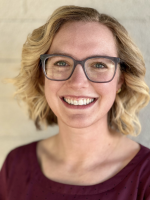
About the Guest:
Homero Gil de Zúñiga, Ph.D is a professor of Journalism and Media Studies at the Penn State Donald P. Bellisario College of Communications. He's also a Distinguished Research Professor in Political Science at the University of Salamanca, where he directs the Democracy Research Unit (DRU), and a Senior Research Fellow at Universidad Diego Portales in Chile. Homero’s work focuses on how social media, algorithms, Artificial Intelligence, and other technologies affect society. He's published several books and more than 170 articles and has presented on these topics for different professional organizations and universities around the globe. Homero has been identified as one of the most prolific scholars in Political Communication and Social Media, and these days he’s working on what the News Finds Me mentality means for society and democracy.
Episode Transcript:
Leah Dajches: We've all been there. We're sitting in the waiting room of the dentist office or at the bus stop we're relying in bed scrolling on our phones when we should be sleeping, and our smartphone shows us something. We're consuming news, or at least we think we are. For many of us, social media has become almost synonymous with fake news and misinformation. We understand that much of the content we see has been selected by an algorithm to appeal to us, and yet we can't look away. Constant bombardment and easy access to headlines, video clips, and sound bites help create the feeling that we are well informed about the goings on of our world. But are we? As I'm sure you've guessed, we're going to investigate that answer in today's discussion by exploring what's become known as the news finds me mentality. We'll explore what this phenomenon is, how it impacts civic engagement, and why it might be leaving us less informed than we realize.
Matt Jordan: To help us break this concept down, we're going to talk with Homero Gil de Zúñiga. Homero is a professor of journalism and media studies at Penn State's Donald P. Bellisario College of Communications. He's also a distinguished research professor in political science at the University of Salamanca, where he directs the Democracy Research Unit, and a senior research fellow at Universidad Diego Portales in Chile. Homero's work focuses on how social media, algorithms, artificial intelligence, and other technologies affect society. He's published several books in more than 170 articles, and has presented on those topics for different professional organizations and universities around the globe. Homero has been identified as one of the most prolific scholars in political communications on social media. And these days, he's working on what the news finds me mentality means for society and democracy. Homero, welcome to News Over Noise.
Homero Gil de Zúñiga: Thank you.
Matt Jordan: So, it's great to have you here talking with us about this. This is something we've been interested in, given the dominance of smartphones as a way that people interact with the news. So just briefly, what is the news finds me mentality?
Homero Gil de Zúñiga: So, the news finds me perception, or the news finds me belief or mentality appears when we have the influence of our social media environment and that perception that we are surrounded constantly by news and information, that they live with us as we use technology, particularly social media, all the time. We start developing this perception that we are being well informed by not actively engaging with the news anymore. Since news are with us and around us all the time, we start perceiving that we are well informed and that we're receiving the important news about public affairs and current events in a daily basis, practically constantly. So, that develops this idea of a news finds me perception, is the belief that we are receiving the news that we need to receive to be well informed and part of the uninformed public opinion. And it emerges from this perception that the news are with us all the time, but we are not actively engaging with the news as we used to, and therefore we develop the perception that the news finds me.
Matt Jordan: So, meaning that just if people are on Facebook or even on various apps that their phone, it might be feeding them things, right? It's feeding them things. That is what you mean by active and searching or perception, that you're just... Stuff is coming at you, and because it's coming at you, you must be informed.
Homero Gil de Zúñiga: Exactly. So, if you compare to the more traditional days or the old days where we were subscribed to a newspaper and the newspaper will get delivered to our house, or we were in the evening relaxing and watching the news at dinner or something like that, we were more active in the way we were consuming news. All a sudden, first with the internet, and more specifically with social media, we rely more on these algorithms, either socially driven algorithms or individually curated algorithms, to generate information for us. And we start believing or feeling that we were well-informed, just as the old days when we were consuming news more actively. And that's the problem because we are not doing that, but we feel we are doing that. And if you start developing the perception, you will start feeling that you're well informed as you used to be, but the reality is well different.
Matt Jordan: So, explain to me a little bit how algorithms work in this sense. When you said a socially curated versus an individually curated algorithm, what is an algorithm? We use that word a lot. What does it mean?
Homero Gil de Zúñiga: So basically, just to break it down, when we are using social media, the information, and not only information, any content that gets presented to us is based on mathematical solutions that an algorithm will present information to us. So, there are two clear ways or paths to generating information or content in social media. One is, let's say that I use Twitter and I personally curate the information I want to or the content that I want to get exposed to. If I'm into news and I start just following on Twitter journalist and mainstream media, professional, factual, mainstream media, I will get information most of the times, but that's not the case. We start following friends, we start following my team. So ultimately, our personally curation, that's the individually driven algorithm, the personal curation may not be geared towards hardcore news. So, that will be problematic because the algorithm is going to learn from our preferences and is going to present information to us that aligns with our preferences. So, it might move us away from more informational content. The socially driven algorithm, on the other hand, may present you with information that is based on what your social networks tend to like or tend to watch or tend to click or tend to share or comment. But once again, we know that not everybody is very active in commenting on certain news all the time. We receive all other kinds of information and content entertainment. So once again, it might be the case that social media is presenting us with a very diverse [inaudible] of content. Some information might be there. And that's precisely the problem, that we feel that whatever tiny bits of information that we're receiving are fair enough game for me to inform in my daily basis. And then this turns out to be not the case. So, people who develop the perception that the news finds them, ultimately over time, they will be less knowledgeable about politics. Because if you don't develop that perception, you will tend to seek information more actively, and so on and so forth, and ultimately, you will continue to be politically sophisticated in terms of knowledge.
Leah Dajches: So, something that we've talked about in previous episodes is this idea of news avoidance. And so I'm thinking about, for myself personally, as our listeners know, I've confessed that I'm someone who I avoid certain topics of news. And so I'm wondering if we fall into this news finds me mentality, is it inherently a bad thing? It sounds like it can lead to some negative outcomes for us as consumers.
Homero Gil de Zúñiga: So, the short answer is yes, absolutely. So far, most of the studies, practically every single study that we've made analyzing and exploring the effects NFM turn to be negative or deleterious effects in the news ecosystem and the public informed society. So, one of the strengths of these effects is, as you suggested, news avoidance, because precisely what happens is that I'm so reliant or I become so reliant on my social media to inform me that the high NFM people, in time, they start engaging less with the news. The first studies that we conducted, we showed how NFM people started to consume less news in TV or in radio or in print media and they will only consume more news in the social media environment. Now, this will... In other studies, we also check the idea that for those who develop the perception, whether or not they will become more news avoiders, in a sense that since they don't feel the need to be active seekers. So, that would predict, in time maybe, that they start actively avoiding news. Why would I consume news if I think that the news are going to get me anyway when things break? And if they're important, they will reach me through my peers and networks. So, all of a sudden, I can avoid news and be content and be happy about my decision. So, it is not only that NFM may have negative effects. Ultimately, it's even worse because these people may start thinking that there's nothing wrong going on with them. It's kind of like if I'm sick and I got diabetes and I know it, maybe I take action and I try to correct my diet. But if I got diabetes by eating whatever it is that I like to eat and I believe that I'm doing the right thing to my body, it's even worse. So, this is exactly precisely what happens with NFM.
Matt Jordan: So, if you're thinking that the news is going to get you, what kind of... Work us through what that belief system would, because it sounds like what we're talking about is that people trust their social networks to curate. They trust the... So, how does that work that they... Are they trusting the machine, are they trusting their people, or is it a combination of both?
Homero Gil de Zúñiga: So, this is a very interesting question to ask because we are precisely at that point in terms of research. So, to... And perhaps we can break this down for the audience if I become to scientisty with this one. So, to measure this phenomenon, there are three dimensions, right? The first dimension is the not active or not becoming an active seeker of news. I don't need to be active seeking news as when news break. And if they're important, they will reach me in social media. The second dimension it's the reliance on peers, which is what you describe. I rely on either my curated network or my friends or my social media contacts to provide me with important information as news break. That's the measurement of this. And the third dimension, and to me, the most important, is the perception that believe that I can be well informed about public affairs by doing this. So, those are the three original dimensions of the construct. But as we learn more and more about all these effects and how the news finds me perception works, we are thinking theoretically, and we propose that in a very recent paper that we published, that there should be a fourth dimension. And similarly to the dimension that captures the over reliance on peers to get me news and to push news my way in social media when things happen and if they're important, we also believe that news finds me perception people, NFM people will also overly on algorithms to inform them. So, a similar way of measuring this, our proposition, which we haven't empirically tested yet, it's only theoretical paper, is to say, algorithms will present me with important information as things break. That's the role of algorithms, and they will do a good job doing this.
Matt Jordan: It's interesting. And one of the things that we talked about when we talked about news avoidance is a kind of distrust of media, right? The traditional curators of what is important for us to know as a democracy, people have come to distrust them for a variety of reasons. We think they're cynical, we think they're biased, et cetera. But what you're describing is that seems like they have more trust in a machine than they do in human beings. How do you understand that? What part of the mentality would explain that?
Homero Gil de Zúñiga: So, there are theories that have been published before in the past decade that would indicate this might actually happen. One of the theories that is important is a theory published by Professor Sundar, also at Penn State University, in which he talks about machine heuristics. And it's this idea that individuals, we make these quick recognition that the machines will do a better job than humans. So, I trust the machine to provide with more balanced information, or the machine will not ingrain or embed any type of biases as a human do. So, the machine heuristics is this idea that ultimately machines will do a better job than humans are doing any given task. So based on that theory, I will tend to propose that NFM will tend to happen similarly, and it is clear to me that NFM and missing heuristics to some extent are going to be correlated or associated. And going back to your initial question, it also... Not by me, but other group of researchers, Samuel Lee and Barbara [inaudible] in the study published last year, they also saw how NFM, by means of lower political interests makes people more vulnerable and exposed to fake news information. And part of our initial research indicated that over time just as NFM people will learn less about politics, they will also lower their political interest, and that makes sense too, if you think about it theoretically, "Why would I be interested in politics and keep my guard up when news are going to get me either way, so I don't have to be defensive in that way? I don't have to be up to speed with being interested in politics, because it's not part of my duty anymore, the news will find me eventually." So they tested this effect as I indicated, through the decrease of political interest, people were more vulnerable and exposed to fake news.
Matt Jordan: Just because they trusted that if it's important, the machine's going to give it to me.
Homero Gil de Zúñiga: Probably part of that, yes.
Matt Jordan: Just a reminder, this is News Over Noise. I'm Matt Jordan.
Leah Dajches: And I'm Leah Dajches.
Matt Jordan: We're talking with Homero Gil de Zúñiga, a professor of journalism and media studies at Penn State's Donald Bellisario College of Communications about the News Finds Me mentality, and what it means for democracy.
Leah Dajches: Homero, when you're talking about social media, and algorithms, my mind is immediately kind of going to a younger audience, is News Finds Me... Is this mentality something we see most commonly among a certain demographic, a younger demographic? Or can anybody fall into this mentality?
Homero Gil de Zúñiga: So the first studies that we conducted revolving NFM, we found an association in which younger people will tend to more rapidly, and to a larger proportion to develop NFM as opposed to older counterparts. We saw this also in follow up studies across different societies. So we observed this happening, not only in The U.S., but also in over 10 societies across the world. But the most recent studies, the most recent data collections, we're seeing that this gap is closing, and explanation, you might think, "Oh, this is good, because finally there might not be a distance between younger generations and older people, like we're always find with [inaudible]. So finally, we are closing that gap, this might be good news." But observing the data, in reality, this might actually be something bad, because what is happening is that practically everybody's developing the NFM perception.
Leah Dajches: What do you think is contributing to this increase in this mentality?
Homero Gil de Zúñiga: I think the main factor here is the pervasiveness of social media use. The more people are getting familiarized with social media platforms and social media use, particularly for news, it's a very robust predictor of NFM, and that happens to everybody.
Matt Jordan: So one of the concepts that I think is interesting with this is the background nature of news then, there's an assumption that we're on social media, there's news going on all around us, if it's really important, it's going to bubble up through the rest of my feed. It's kind of like wallpaper, or ambient noise that is there. So this concept of ambient journalism that you I've read in relation to News Finds Me, can you explain what that is?
Homero Gil de Zúñiga: Yeah, actually I didn't coin that one, that was coined in the early 2000s by a colleague of us, Alfred [inaudible], who is a professor in Canada, and him talking his work is the first time I came across this idea of ambience journalism. And it's this notion that the news are out there surrounding us all the time, whereas before internet era, or social media era, the news were a niche in our daily lives when we actively consume newspaper or radio when we were driving to our work, or on TV when we were watching the news. All a sudden he described this as ambience journalism, not necessarily of something wrong. In his work, if you read it, is the idea that that journalism has become more liquid, and that it is everywhere at this time. And actually in his work, he didn't have a negative aspect of the ambience journalism. And we took that idea of being involved in this cloud of news environment and social media to specifically trail the paths or connect the dots between why being in social media would generate a perception that the News Finds Me, and clearly it's because we think based partly on this journalist ambiance that news are with us all the time. If you think about it, in the old days, or more traditionally, we devote a certain amount of time to news, and probably what is happening is that because of my amount of time that I devote in social media, I have the perception that the news are there with me, I fulfill my time slot, my duty of news is done here. And that we know you ultimately pay the price, because you don't end up learning as much as you should about current events.
Matt Jordan: So if it's going on, we assume that it's going on in my social media feed, so if I'm checking in on social media, I'm effectively checking in on news, is that kind of what...
Homero Gil de Zúñiga: Or at least you perceive that is what is happening. You go online, and you get everything at once. Let's say that you're having your breakfast, and you open your cell phone, and your social media platform of choice, and there will be some news in there, but coupled with other things, a picture of a cat, your good friend, pictures of the last game last night. It's a mixed cloud of information and entertainment, but the thing is, although you'll be presented with news, you might not devote the time, effort to click on them and read them as when you were being active. But on the other hand, you do have the perception that you did your job with the news. And that's where the problem starts mounting up, because, "I did my job, the news, when they're important get me." And ultimately we know that you're not doing your job, and that you're not fulfilling your needs, your orientation needs of being informed about public affairs.
Matt Jordan: So it's that the news is kind of chopped up too, so you're only reading headlines, or somebody said, "Oh, can you believe this happened?" But you're not really getting the context of things, you're not really getting what you would need as a citizen to be informed?
Homero Gil de Zúñiga: I think that's part of the problem, I'll talk about something which is not tangential to this, but it's a different phenomenon, which is incidental exposure to information. So we also measure this idea that people are doing something else, you're in social media and you're doing something else, and all of a sudden you get exposed to a piece of news, and you read it, or you click it and you watch it, so that is being coined as incidental, or inadvertent exposure to information, incidental news exposure. So in the literature, we found confounding effects with incidental exposure. Some people learn about politics, some other people didn't learn anything, some people we couldn't experimentally demonstrate any effects whatsoever, so null effects, neither positive or negative. So in the latest study that we published last year, we saw that the direct path of incidental exposure to knowledge in our dataset as we tested it was negative, meaning people who were inadvertently exposed to news, they would learn less about politics. However, in the instances that that incidental exposure led to two things, one is what we call thorough information engagement, which is exactly and precisely what you were describing, the idea that I click, not only the headlines, I read the whole thing, or I watch the entire video, or I listen to the entire clip. When people are doing that, people who are inadvertently exposed to news through thorough engagement, they will learn about politics. Similarly, when people get incidentally exposed to news and they reflect on those news at a later time, which in the literature is called cognitive elaboration, basically the idea that I would individually reflect on those news that I've been exposed to, what they mean to me, to my environment, to my family, to my life. So when people do that, and they put in perspective all that information that they were incidentally exposed to, they also learn more about politics. In the paper, we call this the paradox of incidental exposure to news, direct effects, negative, but when people are engaging with the news and when people are reflecting about the news, they encounter positive effects on knowledge.
Leah Dajches: In your best advice, Homero, how can we make people aware of this mentality, or help to signal to people that they've fallen into this "news finds me" mentality?
Homero Gil de Zúñiga: Yeah, that's the million-dollar question, right? So we are now embarking in that area. Recently, we are running two different experiments and also we are in the midst of collecting national survey research as well, to test potential ways to combat this NFM perception effects, right? Because so far, we were interested in establishing the effects and learning about the phenomenon. Now we have... And not only my team, I think several researchers across the US and abroad, also in Europe, they have investigated lots of pernicious effects revolving NFM. So for instance, in UK, researchers, excuse me, researchers from Oxford and Loughborough University, Andrew Chatugan and Christine Bukari, they saw how the NFM related also with COVID-19 vaccine hesitancy. So it's something that I didn't think theoretically makes total sense and they empirically tested with data in United Kingdom. So as I said, there are many groups of people across the world now talking and researching upon the effects of NFM. In my mind, I think it's been, in so far, quite well established that the NFM has negative effects on society for the most part. But what we don't know is what kind of things we can do to combat this. One of them, clearly as it happens with many of these is revolving social media. For instance, misinformation or fake news. One big deal will be news literacy. The idea that people learn about how to deal with information, particularly in this dynamic social media context. The other one is in one of the experimental conditions that we are running as we speak, the experiment is taking place, is to introduce in like they do in the literature of health communication, implement certain inoculations or interventions. So for instance, first we will gather subjects who are high NFM, and then we'll create two different groups. One group of high NFM who will be exposed to let's say a piece of information and we will register how many things were they able to recall. And we equate the recalling with knowledge. Are they learning? Are they grasping concepts and facts from the news they get exposed to? And the other group of high NFM, what we will do, we will expose them to the exact same piece of news. But before, we will apply an intervention, just like they do in health communication scholarship. We will explain what the NFM is and we will say, "You previously, in the questionnaire that you fulfilled last week, you were identified as a high NFM person. These are the effects that high NFM people have been observed to have based on literature, based on scientific research." And then expose them to the news in the hopes to see whether or not this type of inoculation treatment or intervention would have an effect. We're hoping yes, because if it happens, we will have some empirical evidence to indicate that this thing can be combat to some extent. But as I said, we are in the means of running the experiment. We don't know yet about the potential findings, what we're going to get.
Leah Dajches: Homero, our first episode is on news avoidance and in particular how people are choosing to avoid the news because it, in a way, it benefits their mental health. They're avoiding the noise surrounding the news, it's too much. It's making people anxious, depressed, things like that. And when we're talking about this news-finds-me mentality, could having that mentality end up being good for our mental health in the sense of my algorithm is trying to curate content for me that I like, that I enjoy, or it thinks I enjoy reading and kind of keeping me away from things maybe that I don't want to be reading. So could there be a slight silver lining in any way?
Homero Gil de Zúñiga: Right. No, I think you're totally right. So they are two different things. Something that it might be better for society, or for me, or for democracy, doesn't have to necessarily mean that it's better for my wellbeing, or my mental health. In fact, as I said, being exposed to information that is gonna be unpleasant to me. Nobody wants to do unpleasant things. It's like going to the dentist. I haven't heard anybody saying, "Oh great, today I'm going to the dentist. I was waiting for this two and a half months to happen." So this is very similar. And there's research that indicates this. You can read theories that would indicate those who are, or have hard tendencies to be nationalists, or highly authoritarian, they tend to report higher levels of wellbeing in time. So yeah, I might feel better, but that doesn't mean that it's better for society.
Matt Jordan: So I'm wondering if one of the best responses to news finds me as a mentality is one that you were saying that you do. Which is that you read the news this morning in a newspaper, or not newspaper, but a digital media platform that New York Times. That the idea that you could rely on social media to keep you informed is in fact an illusion, that that's what the data might support as a finding. Would you agree with that?
Homero Gil de Zúñiga: Unfortunately, yes. My latest book, which has been recently sent to the publisher, Social Media Democracy Mirage at Cambridge University Press. That's precisely what we advocate in the book. That we are generating as society that unfortunately because of social media is become very active, very engaged, very participatory. Because social media, that's one of the things that we also, although, we haven't discussed it today, mobilizes people a great deal. It has precisely for all the things that we've been describing. So people are really participatory, yet they tend to be uninformed when it comes to news because of social media. So definitely social media if we are not active as you are suggesting, may have a negative impact in that sense. On the other hand, if we are very active and we create things that we're supposed to, social media is an incredible tool and we seen this day in day out. People can really gain information from social media. You just have to be particularly active as for how you do it. I would suggest to become active with the news, whether it can be also online, but active with the news. Going through the newspaper you like, buying a subscription and read the news, watching TV news, listen to your favorite podcasts, radio shows. Information, factual information. And if you use social media for news, just know what you're doing and how you use it. And it can be great complimentary type of information. But above all, continue to do all those active practices of engaging with the news actively.
Matt Jordan: And if you're not doing all those active practices and you feel like you're informed, you're probably not.
Homero Gil de Zúñiga: That is correct. Unfortunately, yes.
Matt Jordan: All right, Homero. Thanks so much for unpacking this concept for us. I think it's a really helpful one for thinking about where we are in news world and how we might get somewhere else.
Homero Gil de Zúñiga: Thank you so very much to both of you for having me, for your invitation. It's been an authentic pleasure to talk to you today.
Leah Dajches: That's it for this episode of News Over Noise. Our guest was Homero Gil de Zúñiga, a professor of journalism in media studies at Penn State's Donald P. Bellisario College of Communications. To learn more and to hear an extended version of this interview with additional content, download the podcast at wherever you subscribe to podcasts or at newsovernoise.org. I'm Leah Dajches.
Matt Jordan: And I'm Matt Jordan.
Leah Dajches: Until next time, stay well and well informed.
Matt Jordan: News Over Noise is produced by the Penn State Donald P. Bellisario College of Communications and WPSU. This podcast has been funded by the office of the Executive Vice President and Provost at Penn State and is part of the Penn State News Literacy Initiative.
[END OF TRANSCRIPT]
Episode Credits:
Producer: Lindsey Whissel Fenton
Audio Engineers: Mickey Klein, Scott Gros, Clint Yoder
News Over Noise is a co-production of WPSU and Penn State’s Bellisario College of Communications. This program has been funded by the office of the Executive Vice President and Provost at Penn State and is part of the Penn State News Literacy Initiative.