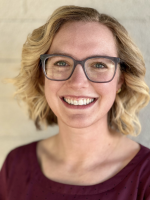
About the Guest:
James E. Causeyisa projects reporter, columnist, and former editor at theMilwaukee Journal Sentinel.He'salso the former president of the Wisconsin Black Media Association. In 2008, Causey was a Nieman Fellow at Harvard University. These days, his work focuses onsolutionsjournalism and how the media can be a tool for responding to social issues rather than just reporting on them.
Episode Transcript:
Leah Dajches: You pour yourself a hot cup of fragrant coffee, then sit down in your well-worn kitchen chair and gaze out the window. The sun is shining, the birds are singing, life is good. You open your paper, or an app on your phone and the room seems to darken. The chirping of the birds outside begins to sound increasingly shrill and alarming. The coffee that seemed rich and smooth a moment ago, now seems stale and bitter. Your chest seems to tighten as you shift uncomfortably in the creaky kitchen chair, and you feel your necks start to tense and your shoulders start to slump. There is so much bad news, so many problems. You feel deep concerned, but what are you supposed to do about any of it? In a word, you feel helpless. But what if we told you there was another option? That there's a form of reporting that doesn't just tell you what's wrong in your community, but actively works to empower you to help set it right. It might sound too good to be true, but as we'll discuss in today's episode, it's a real thing.
Matt Jordan: This is our last episode in this inaugural season of News Over Noise and we’re going to bring things full circle. In our pilot, we talked with Dr. Kirsten Eddy about News Avoidance and what we learned was this: One of the main reasons people avoid the news is that they feel helpless to do anything about it.
So, today, we’re going to talk about a reporting framework that’s working to empower community members to become actively engaged in addressing social issues. Solutions journalism is an approach to reporting that goes beyond just stating what’s wrong—it uses evidence to explain what’s working and what’s not working. In short, it works to create a more effective citizenry by engaging everybody in the solution. Here to talk with us about solutions journalism is James Causey, a projects reporter, columnist, and former editor at the Milwaukee Journal Sentinel. He's also the former president of the Wisconsin Black Media Association. In 2008, Causey was a Nieman Fellow at Harvard University. These days, his work focuses on solutions journalism and how the media can be a tool for responding to social issues rather than just reporting on them.
Leah Dajches: Hi James. Thanks for joining us today.
James Causey: Thanks for having me.
Leah Dajches: To get started, can you give us a little background on what solutions journalism is?
James Causey: Solutions journalism it's constantly evolving is when you take a deeper dive into a story and you almost become the professional where you do all the research, you try to find best practices, you try to find out what's really working at home and locally too, and you try to highlight those points and you write a piece around it or you do a project around it. And the goal, my goal, when it comes to project reporting is to really look for low hanging fruit, things that could get accomplished right away. And also look at big picture type of solutions that could possibly work in a city that could be tweaked to make your locale better.
Matt Jordan: Now, one of the things, James, that interests me about this is it's not just a solutions to the problems of community, but it's also a solution or a solve to the problems of journalism. So, what's different about this approach from the way that journalism is done, business as usual?
James Causey: Well, one thing, when you usually work on a solutions type piece, it takes a lot of time. It's not a quick hit. It's not something that you could turn around right away because you're doing a lot of research and you're taking this deep dive into it. So, it takes a big commitment from a news organization to put the time and energy towards something like this. But usually before you even start on the solutions piece, you see a problem, you notice a problem and you say, "Man, how come we can't get this resolved?" And it doesn't seem like the political leadership has the will or understanding on how to tap on an issue. So, for me, since I'm deeply involved in my community anyway, I sort of see these things firsthand and it just makes me wonder, well, somebody has to be doing this right. And because of that, that's why I take these deep dive into these big pieces. And honestly, if you're not really passionate about it, you probably shouldn't be working on that as a solutions project anyway.
Matt Jordan: One of the things that it seems like you're saying is that instead of listening to political leaders on this and kind of doing the both sides journalism where you get a quote from one side and quote from the other side, you're listening to the people in your community. Is that an accurate way to describe it?
James Causey: Oh yeah, because they're usually the ones doing the grassroots efforts that see the problems right away. Oftentimes, they're the people that we typically ignore. And that's why a lot of the problems that exist for so long because we don't listen to the people at the grassroots level. And that's really where it starts.
Leah Dajches: So, how would you say then that people tend to respond to solutions journalism? What kind of response have you seen in your community?
James Causey: I think the responses vary. At the grassroots level, of course, they love this type of reporting. At the political level, you know, political leaders are elected and they think that they have the solutions, and they really don't like to listen to the people at the grassroots level often on the best way to address a problem because they think they have the solutions. They don't heed the advice that's offered in the solutions piece. Sometimes they do, but they can always run behind and say, "Well, we don't have the finances to get something like this done.”
Matt Jordan: So, you have a lot of folks that are working with you in the Milwaukee area, it sounds like. And have some of these people come from news organizations that aren't interested in doing solutions journalism?
James Causey: Yeah. One thing that I like is when the big local nonprofits get involved, because a lot of the problems that I discover in my journalism that I tackle, the lot of the big nonprofits, they see those as issues as well that they like to address. So you get support that way. For instance, trauma is a very big issue that I've been tackling in a lot of different pieces. In a lot of the big local nonprofits, they see that as an issue that's high on their list as well. So when they say, "These are the three to five things we're going to tackle." Usually it's in line with a lot of the issues that I see at the grassroots level. So you can form really nice partnerships there. And the partnerships don't have to always be financial. It could be in the sharing of information. They have a lot of experts in their fields that you could use. And it also comes in sharing space. If you do an event around trauma, a lot of these large nonprofits, they have connections to places and say, "Hey, why don't you hold it here? Why won't you host this event here? Why don't you have this person come in?" Maybe even they don't want to sponsor having a speaker come in. So, it's more bang for the buck. Because one thing you don't want to do, you don't recreate the wheel. So if a lot of people are interested in the same thing that you are, form partnerships because you could really reach a lot of people that way.
Matt Jordan: It sounds like one of the thing you're talking about is not just building partnerships but building trust with the community. And we know from studying readers response to journalism or readers trust in media that this is something that's waning. Why do you think kind of regular, business-as-usual, news orgs aren't doing this kind of work? Because it sounds like what you're doing is exactly what they need to do to rebuild trust with community.
James Causey: Well, trust is a very big issue. I mean, a lot of people that I cover have huge trust issues with the media. And if you think about it, if we won't really want to talk about trust, a lot of local news organizations, they're not very diverse. So that's an issue for one. And a lot of people that we really need to talk to at that level, they haven't been interviewed by a reporter before. Or if they have been interviewed by someone before, it's usually for something really tragic and it's like helicoptering in and helicoptering out. Solution journalism requires you to be there. You're going to be ingrained in a lot of this stuff. And like I say, it takes time. And a lot of local news organizations don't have that kind of time and energy to devote to a project like that. That's why partnerships are so important. So it's tough. And speaking from a newspaper perspective, we're fighting for our lives every day. We're facing cuts, we're facing buyouts and all kinds things like that to even stay afloat. So, we've run into this a lot in really finding a time and energy on something that we really care about. And to tackle that, that's a large commitment. And I'm lucky that my organization still believes in that.
Leah Dajches: So, you've mentioned a couple times that solutions journalism takes a lot of time and a lot of resources. How long do you stay with a story in order to ultimately assess its effectiveness?
James Causey: Well, I always say you get married to a, it's not a story, it's a project. So you get married to a project and you're connected to it throughout. They stick with you, and you don't, after your project is over, you just don't turn your back on them. I mean, you still stay connected. If something happens, you still want to be there. And at least that's how I feel. So each project that I worked on, I'm married to for life. So, one thing that I really try to do is to measure impact after. I keep writing stories, keep writing stories, but after a year or two, you could always write this story on what has happened since your project has ran.
Matt Jordan: Yeah. It's interesting the way you frame that because it's sounds like the difference between a story, which is a kind of like you said, the helicopter approach where you kind of come in, you get a story, you knock it out, and then you move on to the next story. And we know that this is one of the reasons why people are avoiding the news, right. Because they don't feel like it's a sustained conversation on anything. And really, it sounds like what your projects are, are a lot like what people used to describe as a beat reporter, somebody who stuck with a neighborhood, stuck with an idea and created a sustained conversation in the media about that. And that kind of sustained conversation is something that I think is really lacking from journalism as we know it.
James Causey: And it's the best way to build trust because people know that you're not just there when it's bad news and then you're gone. I think what it comes down to is that when you really work on pieces like this, you really get to the grassroots of people. They're not just numbers or someone you just have to talk to, plug into a story and move on.
Leah Dajches: If you’re just joining us, this is News Over Noise. I'm Leah Dajches.
Matt Jordan: And I'm Matt Jordan.
Leah Dajches: We're talking with James Causey, a projects reporter and columnist at the Milwaukee Journal Sentinel about solutions journalism and the potential it holds for strengthening democracy.
Matt Jordan: You know, one of the things that people talk about in relation to local journalism and why we've been talking a lot about local journalism on this podcast, is that local journalism also helps cultivate civic engagement. People, when they read about their communities, when they feel like a reporter is talking to them, getting to know them, they end up being more engaged. Have you seen that as an impact of when you follow up with people saying, how'd you do on your math test? Did you make the basketball team? Do you get a sense that that brings them back into community in a way?
James Causey: Yeah. And one thing that I try to do with my solutions pieces, and I'm glad you brought this up, is like I try to have an engagement element to it, where I bring people together. I try to bring the experts together with the people at the grassroots level to the people who we're trying to help. And I try to have a conversation with everybody in the room to try to get something done. That's why I, it is sort of like my capstone, wrapping everything up at the end. And to me that's very important, because I want everybody who leaves my events to walk away with something like an action plan. So, I do this big project. People read it, say it ran over a period of two or three weeks, or it ran over a weekend or whatever. We host this big event where we try to do them in person now, where we have people come out, maybe a panel discussion. And what I also try to do is have the resources there to help people as well. If it's something around housing, I'll have ACT Housing there that helps low income people get into their first home, Habitat for Humanities, which helps people, first time home buyers. So I try to have those organizations there too. So people could say, "Okay, this is what I need to do in order to become a homeowner, so it's so tangible." So they walk away with something. And then you can always do the follow-up three months, six months, a year later, where are we now? And bring those same people back to see where they are and write a story around that. So that's why I say you become married to your project if you do it right. And if you're really connected and passionate about it, it should be something that you always want to come back to. And you want to see what the success stories are. And you also want to see what the failures are. If something didn't work, you want to say why it didn't work or what should have been done differently to make sure that the outcomes would've been better.
Leah Dajches: So solutions journalism sounds pretty great. What are some ways I and others who are listening can locate and differentiate solutions journalism reporting from more standard journalism?
James Causey: I'm a little bit different and unique, because I'm a columnist as well. I add some editorial to some things, or I have an element of editorializing maybe in a column that introduces my project or something like that. And I tell people why this is important and what has been done. So I think a solutions piece will have a number of things in it. For one, it's going to say what the problem is. And people get tired of their problems because we know people always say, "Well, we know what the problems are." But the second thing that it usually has is who's addressing this issue and who's doing it well? And then you have where you stand. Whatever city you're living in, this is where we are on this. And for instance, Detroit was in the same situation two years ago, but this is what they did to improve their situation. We're going to tell you, "We went there, examined what they did, and make you scratch your head. Oh, they had this element, this element in this element. Well, we got those elements back at home. How come we can't do that?" And so, you talk about that and you talk about the impact that it could have on people. And that’s what…when you… solutions journalism gives you a clear defined way of showing where a problem is, why it exists, and who’s responsible for it. That’s the only way you can get things done. And then when you point out who's responsible for it, then it's the element of what are they going to do to address it? If they do nothing and maintain the status quo, then that's a problem. If they try to address it in some way, shape, or form that hasn't been working, they keep trying the same thing over and over again, then that's a problem. But if they do something unique and say, "Hey, enjoyed that piece and it's something that we're looking into and we're going to try it", and they try it and it works, then that's a win for everyone. So that's what you always hope for.
Matt Jordan: It's interesting you say almost defensively, “Sometimes I do a little editorializing.” I think that one of the things that often news organizations do is they make this huge distinction between a columnist who editorializes and a reporter who doesn't do that. And it strikes me that what you're doing is you're trying to blur those lines in a really helpful way. That there's something about this approach to reporting that isn't so worried about that criticism of saying, "This is what I think should happen." Whereas a lot of reporters seem to defend themselves from that criticism, that mostly what they're doing is saying, "I want to take myself out of this. I want to report this as if I were somewhere in the middle of nowhere and have no opinion on it." Whereas what you're saying is, "This is where I'm coming from and this is what I think should happen." And I wonder why news orgs are so scared of that approach because as you say, once people say, "Oh, this is where he is coming from," they don't say, "Oh, he's biased." They say, "This seems like it's going to help my life."
James Causey: Yeah. A couple of interesting things there. For one, I think that more reporters need to let their guard down and listen to people. When I was working on this garden project, I didn't take out my notepad the first two times going to the garden. I took mental notes. And I'm in a unique situation because I can use my editorial voice because I live in these conditions too. So I'm the grassroots, if that makes any sense. I live in these areas where a lot of this stuff happens and people see me at the grocery store, they see me at events and things like that. So they know I'm just as much a part of this as they are. And that helps me to use my expertise from what I see to add that editorial voice that I do. But one thing that I want to say that I think is important: I think all reporters should let the subject know what you're trying to do. A lot of times when you interview people, people don't know what it's going to look like or anything like that. They just pretty much said, "Let us know when it's running." But I think it's important when you are working on something like that, you have to say what your vision is. You have to tell them why I chose to talk to you, what I'm trying to write about, what I'm trying to understand, and be vulnerable. And more reporters need to do that. And I'm going to say something that ... I write about people of color, black people. And they don't trust the media at all. I'm just going to be frank. And so what I want to do is leave them with a good experience from that, so they could tell other people, "Yeah, I know James. He was fair to me. This is what he said." And sometimes, I read sections that are very sensitive back to them because I want to give them the opportunity to know what's going to come out before it does. And I know everybody doesn't do that as journalists, but I feel when it's something very sensitive, it's my responsibility to do that.
Matt Jordan: Interesting how you say that a lot of the folks in your community don't trust reporters, but nobody trusts reporters right now. And part of that is by design. A lot of our politicians, so distrust of the media. The media is the enemy of the people we've heard for the last six years or so. Do you make that move over to what we used to call the primary definers, the politicians, the government officials? Do you include them in your stories as well to also cultivate a relationship of trust with your projects?
James Causey: Oh yeah. Projects require not just talking to one side. You do all the standard steps that you do in normal reporting. You present both sides, because your idea is to get to a solution. So to get to the solution, you have to talk to everybody. Some people never make it into the story, but they leave something with you that could be a trigger for something else in a story. So yeah, I talk to everyone and I think it's important to even have that relationship with the higher ups or politicians or whoever. To explain to them what you're trying to do as well. And when they know that you're working on a project, they treat you differently than when they know you just need a quote for a story. You could talk to the governor or mayor something like that and say you pretty much just need two or three quotes from them for a story. You just bang that out and you call them, and that's how they deal with it. But when you working on a project and they understand the depth and the level that you're working at, they tend to come at you differently too because they know what you're trying to do. So it's important to explain that, and you get a better response from them. And you'll be surprised that they're more open to you when they know you're working on something big.
Leah Dajches: So this is something I've mentioned on a couple episodes before, is that I'm a self-proclaimed news avoider. But what you're describing breaks through that barrier. I find the approach you take to working with communities and that emphasis you put on including those community voices and their experiences really interesting. Do you think that solutions' journalism is the solution to not only societal problems, but also to the problem of people turning away from the news itself?
James Causey: Yeah, I do. There's a couple of problems with that. I think it could be like this weaver to bring people back, for one. I know it's a weaver because you're talking to people who have avoided the news and you're giving them solutions to a lot of problems that they see in their own backyard. So I know it's a weaver-piece. However, because we put so much time and energy behind it as a news organization, we tend to put those pieces behind paywalls and make it difficult for the people who need the information the most to get to it. That's a problem. I get it, we have to get subscribers in order for us to stay in business, but I think when you do something that people really need and they need more of, I think it's important for you to give that information to them for free so they can share and they can benefit from it. Because what good does it do to have this gray solutions idea and the people who could benefit it from it the most, can't even access that information? But that's above my pay grade. All I could do is say this information shouldn't be hidden behind a paywall. This information needs to get out to everyone so they could see it.
Matt Jordan: Well, if I could speak to your boss's boss, I mean, doesn't it seem like that this is the kind of thing that would help you grow your audience? This is what we're talking about all the time, is the shrinking number of people reading the news and tuning into newspapers. And a lot of that's because they read the newspaper and they say, "There's nothing in here about me," right?
James Causey: Yeah.
Matt Jordan: But business-
James Causey: That's when it comes down to the dollars though, because as a news organization, and working for a news organization that's endured plenty of buyouts of late, it's tough. It's very tough, and I think that's another thing we need to do as a news organization, to explain our financial situations, explain to people why we do what we do. People really don't understand what a reporter does or what a project reporter does, what a editor does, they have no idea. So we could do a better job on explaining who we are, what we do, how we're connected to the community, and why it's important for us to have a community thrive. And even though we're in media organizations, we have done a terrible job on explaining what we do and explaining who we are.
Matt Jordan: Well, it seems like everybody would want the community to thrive. What you're describing to me sounds like such a great approach because it's an ongoing conversation, right? It makes democracy the project, it makes community the project. And I think that that is something that you can grow an audience on. It's not just about reporting whatever dumpster fire is going on, it's about how to improve the community. And that's really what we want to do as a democracy.
James Causey: And one thing, well, this is important too. I want people to take this away. So when you do an engagement event around a project, make sure that when you put your panels and things like that together, make sure that you have people from the community on these panels. You don't necessarily want these group of eggheads telling people what they should do. You kind of want the people to lead this push, as well. So one thing I always try to do in each one of my projects, is I want the people to be involved as much as I can. So I try to host events in their community. This 53206 project on the garden that I did, there was some editors who wanted to host this event down at City Hall, the engagement event, because City Hall is a beautiful area. They've seen events there before. And I said, "Well, no, I think the event should be in 53206." For one, it'll make it easier for people to get there; for two, some people are too afraid to come to 53206. They need to see the area. They need to see that as more than just the shootings and stabbings and the mayhem that they see on little clips on broadcast news at night. They need to understand that there's love there and there's people who want to see change and things like that, so I fought to have it at the Wisconsin Black Historical Society in the heart of 53206. That event turned out being probably the most diverse event ever in this city. You have black, white, young, old, everybody. It was a mixture of leaders throughout the community all the way down to young people who are just trying to discover why they're poor. Why do these conditions exist? It was one picture that was taken by a friend of mine who had this probably six year old kid talking to the mayor of the city. That wouldn't have never happened had we had this any place else. It was perfect because that little kid probably couldn't have got down to City Hall to have that little brief conversation and talk to the mayor at that moment. So it's important to do those kind of things, and never forget when you do projects, it's not always about hearing from the so-called experts. It's about the people.
Matt Jordan: And that is a great place to wrap up. James, thanks so much for talking about this really inspiring work you're doing, and I really hope that it inspires others around to follow your lead.
James Causey: Well, I hope it inspires editors to put aside the time to do project pieces like this because they matter. They really do.
Matt Jordan: Okay. Thanks so much.
James Causey: Thank you.
Leah Dajches: So that was a really interesting and insightful conversation we had. Matt, what were some of your larger takeaways?
Matt Jordan: Well, one of the things that it strikes me is that we always have this view of democracy as this pillars of marble or whatnot. And really what James is emphasizing is that democracy is community. It's an ongoing conversation, and it's that the role of the press, the role of the news, in doing that is to foster that conversation, to keep people engaged, to keep people talking with one another. And what's your takeaway?
Leah Dajches: I think for me, the biggest takeaway was that as citizens, we don't have to feel hopeless when we read the news. And I really think listening to James speak, I found myself already feeling more positive, more optimistic, that there are journalists out there, there are people who are putting in the hard work, they're taking the time to get to know the communities and well, making me feel hopeful that we can create change. You know, at the start of the season, I somewhat identified as a news avoider, but as we've unpacked these topics, I've put some of these practices in place and I've actually found myself becoming more engaged with the news. And so I think James really drove this home for me by helping me to understand that there are forms of reporting, like solutions journalism, that make me actually want to seek out and want to read and consume the news. I now subscribe to multiple news newsletters, including a solutions journalism one that curates the projects that come into my inbox and it's very interesting. So watch out world, I'm a news junkie. That's it for this episode, and this season, of News Over Noise. TO learn more and to hear an extended version of this podcast with additional content, download the podcasts at wherever you subscribe to podcasts or at newsovernoise.org. I'm Leah Dajches.
Matt Jordan: And I'm Matt Jordan.
Leah Dajches: Until next time, stay well and well informed.
Matt Jordan: News Over Noise is produced by the Penn State Donald P. Bellisario College of Communications and WPSU. This program has been funded by the office of the Executive Vice President and Provost of Penn State and is part of the Penn State News Literacy Initiative.
[END OF TRANSCRIPT]
Episode Credits:
Producer: Lindsey Whissel Fenton
Audio Engineers: Mickey Klein, Scott Gros, Clint Yoder
News Over Noise is a co-production of WPSU and Penn State’s Bellisario College of Communications. This program has been funded by the office of the Executive Vice President and Provost at Penn State and is part of the Penn State News Literacy Initiative.