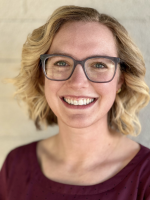
About the Guest:
Chenjerai Kumanyika is an assistant professorinNYU's Arthur L. Carter Journalism Institute.Alongside his scholarship and teaching, disciplinary service on the intersections of social justice and media, Kumanyika specializes in using narrative non-fiction audio journalism to critique the ideology of American historical myths about issues such as race, the Civil War, and policing. He is the co-creator, co-executive producer and co-host ofUncivil, Gimlet Media’s podcast on the Civil War and he is the collaborator for Scene on Radio’s influential Season 2 “Seeing White,” and Season 4 on the history of American democracy. Kumanyikahas written in scholarly venues such as Popular Music & Society, Popular Communication, The Routledge Companion to Advertising and Promotional Culture, as well as public venues such as The Intercept, Transom, NPR Codeswitch, All Things Considered, Invisibilia, and VICE. Hiswork has been recognized with several prestigious honors including the George Foster Peabody Award (2018) for Uncivil and The Media Literate Media Award (NAMLE) for Scene on Radio (2021). In 2021, Kumanyika received the Union of Democratic Communications’ Dallas Smythe Award for his career accomplishments and advocacy. He studied mass communication and critical media studies at The Pennsylvania State University’s Donald Bellisario College of Communication where he earned his Ph.D.
Episode Transcript:
Leah Dajches: In 2014, the podcast Serial debuted, sparking a fascination with long form reporting that continues to this day. At a time when print journalism is struggling, podcasting is thriving. Virtually every major news outlet has a podcast as part of their brand. Some have multiple series each dedicated to a different beat. From historic happenings to current events, you'd be hard pressed to not find a podcast that caters to your interests no matter how niche they may be. What is it about this medium that captures our attention? Can this be a place where investigative journalism could find a viable outlet? Why might it be better than, say, TV news or social media news?
Matt Jordan: We're going to talk about all of this and more with Dr. Chenjerai Kumanyika. He's a researcher journalist and artist who works as an assistant professor at NYU. Chenjerai his research and teaching focuses on the intersections of social justice and emerging media in the cultural and creative industries. He specializes in using narrative nonfiction audio journalism to critique the ideology of American historical myths about such issues as race, the Civil War, and policing. Chenjerai is a co-executive producer and co-host of the podcast Uncivil. He has also been a contributor to Transom, VICE and NPR's Code Switch, and Invisibilia podcasts and All Things Considered. He's a news analyst for Rising Up Radio with Sonali Kolhatkar. Chenjerai, welcome.
Chenjerai Kumanyika: Thanks for having me.
Matt Jordan: So, podcasting has become a huge growth sector in a news and information economy that is otherwise pretty bleak for the news. In 2005, only about 11% of the population listened to podcasts or was aware of it and last year, 64% of the population had, which is an estimated 183 million-- 52% of Americans listen to a podcast once a month, and one of five of those listen to them every day.
Last year, an estimated 109 million people in the United States are expected to be listening to podcasts, and it's supposed to grow by 5.3% in the previous year. So again, this is in a news environment where we're seeing less print journalism. Podcasting is thriving. So why do you think podcasting has grown so much as a form of news media?
Chenjerai Kumanyika: Well, let me just start out by saying, I think it's great to hear your take on podcasting, because I think there's a lot of people in the industry who have been feeling a lot more pessimistic or just that we're in a space that's less promising. Most of those people, though, pushing that particular view are the people who thought they would make a lot of money in podcasting and news podcasting and so forth. So that's one sector who is, in some ways, moved on from their investments. I just wanted to say that. Another category of people though is people who are working, journalists who are working and all kinds of producers and different people who were working in this medium, and sort of founded a way to do work that was better, to do real investigative reporting, sustained series on topics, build audiences who were really interested in that, and then a lot of those people have found themselves laid off in this particular period of the market. So, I know I'm jumping the gun on stuff, but we can get into that. But anyway, to answer your question, I would say there's a way to look at podcasting as really drawing on radio mostly, right, the preexisting medium of radio. And so, a lot of what is good about podcasting is what's good about certain forms of radio. I think that it's-- you can hear it. You can listen to it. There's something about the voice that I think is just really deeply human and goes back, you know, the whole idea of a voice telling you stories is a very human thing that precedes really maybe all other forms of storytelling and news. People talking to each other before there was a thing called journalism, just getting the news, right.
Matt Jordan: Right.
Chenjerai Kumanyika: That kind of thing. And so, I think that there's something about it on that level that's interesting. When I first started hearing about podcasting, it was really about people kind of going down rabbit holes that were interesting and very relevant to the news environment, things that were historical. Particular dives on topics precisely at the point when you started to really see a retreat and when the newspapers, and the places that formerly would have been nodes that assembled the resources to do real investigative journalism reporting, like they were being put in crisis because of things that happened with Craigslist and Facebook and other things like that. And yet, on this other side, you had all these people who were doing these deep dives, building their own audiences, and one of the leaders, sort of, in public media on that front was, of course, This American Life and that was coming out of public radio in a way, right. And so, I think that one thing was that people were seeing the kinds of stories they liked, the kind of news being covered in a deeper way than the kind of breathless sort of telling news by the secondhand clock medium of news. The other-- another thing, though, I would say is that there's a few other things that podcasting, I think, at least-- now I'm talking about the narrative audio documentary style that it does that the news wasn't doing quite as well. Podcasting allows you to form a certain kind of connection to the host and to the person telling the story, which is maybe not necessary, maybe even potentially deceptive and problematic, but it is-- it does kind of feel human. We want to know who's telling us this story and why and maybe tell us your stakes. If you think about what people-- I mean, this was a controversial element of Serial, but the idea that the host is going to tell you here's why I'm going to tell you this story and a little bit about me. When you're looking at like a New York Times 800-word piece on something, you're not going to have the time to do that in 800 words, to establish that. And so, I just think that all those things as well as the on-demandness of podcasting was another factor that I think really helped it. Like, with radio, you can listen to it while you're in your car. You can listen to it while you're cooking. But what happens if maybe-- I have a four-year-old now-- if you have kids? What happens if your four-year old's screaming right at the point when your show is on when you want to listen to-- I'm in New York, so I love the Brian Lehrer Show-- you want to listen to Brian Lehrer? So, there's pre-existing news content that really is just news broadcasts that podcasts help them become things that were on demand. And I think that, that also is great because people could choose a little bit more how they listened. So yeah, there's a lot more to say about this, but I think those are some of the factors.
Leah Dajches: You know, as you're talking to us about this, I'm really interested in this connection that audiences can create with the host. You're mentioning you can get to know the host. And in fact, there actually is research that shows Americans who get their news from podcasts say they trust the news from podcasts more than the news they get from other sources. And we know that news trust in general is relatively low. And so, I'm wondering, do you think it's this kind of sense of intimacy or connection that gets fostered with the host that creates trustworthiness, or are there other elements or kind of creative ways that we can foster this sense of trust back into media, and in this case, news media through podcasts?
Chenjerai Kumanyika: Thank you for this great question. I'm going to answer this in a little bit of a nerdy way. When I was back in grad school, the professors who were teaching me critical media theory, one of whom is in this podcast right now, really helped me understand the importance of taking the ideas of trust and thinking about them critically, right. If we notice that there are affordances or aspects of this media that cause it to be more intimate, how can we reflect on how those things might be helping but also might be part of the problem in a lot of ways, right? Like intimacy, I think-- so all those words-- I mean, I actually think trust is a word that-- I understand why people want to trust media and trust news. And I understand that in an environment of misinformation and disinformation, I get why people use a word like trust. But I just actually told my journalism students, actually, we don't really need trust. What we need is verification. We have some empirical things that we can verify, and, in that regard, I think that you may look at a particular news source and say they have an established track record of putting stuff out there, withstood the test of scrutiny. But that's, I think, different than trust. I mean, I told my students, don't trust anything I say. Look it all up. Assume I might be wrong, and you're going to figure out why, and then we'll be in a good conversation, and you'll be building strong journalistic practices. So-- and in some ways, if we really want to flip it, I mean, we could say that if you look at Fox News or some of these other places where they've built these cults of personality and celebrity, it's precisely the aura of trust that allows that to function in the way that it does, that kind of disinformation. But you're asking, I think, a really smart and slightly different question, which is, how can we look at what some of the other features are? So, I think there's a couple of things. One is simply the fact that you're allowed some time in a podcast. If you think about a historical podcast like Throughline or Uncivil, we had eight episodes, which was really far too short to unpack the Civil War. But just the time that you don't have in print media or in the sort of ridiculous spectacle of cable news, sort of gamified where everything becomes a horse race, it's like-- which we're about to see. We're about to see a deluge of that in the worst ways over the next year. So, we should all brace ourselves and take our nausea medicine or whatever because it's about to get-- it's about to get terrible. But you don't get the ability to sit down and really just take some time to say, listen, particular thing has some history, right, here are some of the characters that are involved, here are some of the stakes and just really tell. And it's interesting the way that the creativity and narrative structure of audio narrative nonfiction podcasting functions, because you're looking for plot turns and part of the plot turns are often drawing out a particular idea of what might have happened and then debunking that very-- that same idea. Here's why it looks like this, but then it was this way. So, I think that podcasting, that's kind of a standard of the genre. That's one element. Another element that's important-- the way I was taught, and I was taught by people like John Biewen. I was taught by the people at Transom Radio Workshop which is a great place that sort of teaches people who want to do audio. And then I got to work at Gimlet. So, I was working under people like Alex Blumberg who co-founded Planet Money and Gimlet and all kinds of other really, really talented people, Invisibilia Lulu Miller who now hosts Radiolab. She was one of the first people at Invisibilia and Yowei Shaw to give me a shot. And one of the things they taught me is listeners don't want to be editorialized to in this genre. They want to hear a story and have the sense that they're getting the facts rolling out and that they get to make up their own mind. Now obviously, we're making all kinds of selective choices, right, that are pushing in certain directions around a particular analysis. But there is a sense of trying to deliver it in a relatively straightforward way like here's what happened. So, you can hear what's happened. Here are some of the things that might even challenge what we think. And then at some point, you tell people what it means, right. That's a big thing that Ira Glass dresses like you. You say this, and this and this happened in your structure, and then you tell people what it means.
Matt Jordan: I'm interested, because you said before that as opposed to an 800-word New York Times thing that is following really this kind of style of The New York Times, right, where you don't feel the subjectivity, or the voice of the journalist. You get the kind of here's the one side says this, one side says that. We don't know what it means. We know that frustrates readers, right. There's all kinds of research that suggests that readers get really frustrated by this kind of both sides presentation where they don't feel like they understand what it means, right. And you're saying Ira Glass tells-- teaches to do the opposite or to do something more which is to at the end, after they've gotten to know you and know what you think and know what you feel, to tell you what it means. Maybe that's one reason that the trust issue is so much more. It's like they're not holding something back like you feel like sometimes journalists are doing.
Chenjerai Kumanyika: Yeah, I think so. I mean, I think in the end of the day, one way to look at this is like the literary form of print writing even offers us all kinds of ways to engage people. It's almost like a waste if you just use those to just firehose information at people, and then you wonder why people don't really want to take the time to read because it's just like I'm just going through a list of facts being presented. It's like, no. It's like you have somebody's attention. Pull us in. What's a question that people might actually care about, right? I mean, these are things that I think good print writing does that also people ostensibly try to do in some podcasts, right, in some of the podcasts people like the most is to draw you into a story or a situation and identify questions that you-- I remember in an early podcasting workshop, someone asked me, they said, why is the listener listening at this point? And it just forces you as a reporter, investigator, and storyteller to step out for a minute and say, wow, why should people care about this? And also, who's the we, right? I remember doing my dissertation defense, actually, you saying, Chenj, you got to reflect a little more critically on how you're using the word we and that has become so central to how I critique the news right now. Who is this we, right? That's a question that has to be asked. And the we of The New York Times is ultimately an elite we, right? I mean, let's just be real about what it is, right. This is like sort of-- I was just talking yesterday-- I hosted an event with Tony Karon who's the senior editor at AJ+ which is an Al Jazeera news digital outlet. And he was just talking about how essentially if you go back and look at the conversations that some of these really old newswires were having, the AP and many of the other people, some of the British outlets, at the time when they were really explicit and honest like, yeah, our job is just to essentially transmit the needs of empire, right? I mean, there's way-- there's certainly continuities. I don't want to argue that that's never changed and to simplify it, because I think that a news institution like The New York Times which overall has failed in such spectacular horrible ways in the genocide that we're currently living through. But these are contested institutions, and the news is producing some of the worst news. Even a place like CNN is contested. There are people in it who want to do better, who are trying to do better, and I think it's important for us not to complete power, right, in the Gramscian sense by like just saying, oh, it's all over. They're just one [INAUDIBLE] No, they're fighting. And a few journalists have told me that some of the harshest critiques of those institutions help the people inside of them to want to do better.
Leah Dajches: If you're just joining us, this is News Over Noise. I'm Leah Dajches.
Matt Jordan: And I'm Matt Jordan.
Leah Dajches: We're talking with Dr. Chenjerai Kumanyika, an assistant professor at NYU, about the role of podcasting in today's news media landscape. As you're talking about this, I'm so intrigued, again, by this idea of the we. Like, who is the we that's even creating the news or the podcast or these stories?
And so, I'm wondering, as we're seeing this rise of podcasts, and we also kind of tend to see within research and societally, this idea of what news is expanding, I'm wondering are we seeing really this rise in niche audiences or topics that really comes through specifically in the format or the we-ness of podcasting?
Chenjerai Kumanyika: Yeah. I mean, look, there's someone else who knows all of the hard numbers when it comes to this factor. But I'm someone who, somewhere after my college years, fell in love with public radio. I would be commuting and driving and listening, and the comforting voices were there, and I just-- I was keeping up on stuff, but it was shows like On the Media, This American Life and some of these other shows where I was like, wow, these are incredible stories. But at that point, I did kind of feel like I was listening into white people's conversations. I'm like these stories are brilliant, and they're great, and also, this is not the worlds I've mostly inhabited, right. And so, I would sometimes try to put friends onto it. Like, yo, I'm trying to tell you, man. Like, listen, you know what I'm saying? Like just re-imagine me in the barber shop like, bro, you got to listen to this public radio story. They like, bro, we're not listening to that, you know what I mean? And part of why they weren't listening to it because the sort of voices that constitute the we of news in those communities might be coming off of like, I mean, a morning-- there's-- Well, actually, Philadelphia has WURD, a sort of black community station. But even in formats like sports or some of the R&B and hip-hop stations morning shows, right, those were black voices in there that were a lot-- way more dynamic, I got to say by the way, and relating so it wasn't that people weren't getting news. So, I think what happened with podcasting was when you have a podcast like The Read that comes out on loudspeaker networks, and this is actually before Serial I'm pretty sure, or the Code Switch, or Another Round, or even some people have claimed this about what we did with Uncivil, we're kind of appealing to a different we. And my experience of news and public radio informed me that-- I said, look, if I can listen to these white folks like on the weekend on NP-- I mean, come on, you know, on NPR. Look, it's fun, but it's very white on the weekend. Let's just be real, right? What's the-- what is it? What's the prairie-- what's the old prairie--
Matt Jordan: Prairie. Prairie Home Companion.
Chenjerai Kumanyika: Prairie Home Companion. I've listened. I've listened to the whole thing driving, you know what I'm saying, car talk. It's like look-- but I'm like if I can listen to that and still find enjoyment and meaning in them type of shows, then folks can come over to my world a little bit when I'm-- to our we. And I think you have seen those. It's like people addressing things that are interesting. Sometimes that shift in the we is like, what's important? What's the perspective? What are the assumed norms? What gets into the kind of Overton window of that coverage? Particularly, I think, when you're talking about people who are coming from marginalized or historically oppressed situations, there's an inherent skepticism about the American project that its even baked into like some of the informal humor and conversation. And that's the thing that I think I really related to because I-- it's like sometimes when I go to dinner with black people, we might be talking about race the whole dinner. And then when I go to-- when I go to dinner with like my-- some of my progressive friends, I mean, if they're-- listen, if they're real lefties, we just hating on power the hold dinner. Depending on where they are on the political spectrum, it's like we're going to have a section where we complain about a couple of the things wrong, and figure out how are Democrats going to solve it and, you know. And then we're going to get to the other real issue. Let's talk about Succession, you know. That's the most of the dinner, you know.
Matt Jordan: Right. So, a big sector of podcasting, I think it's like 23%, is still kind of true crime, Serial bread type stuff, but there's another form that has become really popular, and it's news commentary, which I guess you could say comes from, again, from radio. And the most successful of them are those that come from the shock jock format, right. Joe Rogan just-- Joe Rogan just signed a $250 million contract, and he's the heir apparent of the shock jocks, right. So, who is the we of that group, and what does that tell us about what is now an incredibly popular way of getting-- Though they may trust it, I would say Joe Rogan is probably one of the biggest super spreaders of misinformation. I mean, dogs are dying of parvo. Florida is overrun with measles because this guy has decided to make anti-vax part of his brand. So, what does that tell us about the we of these news commentary shows?
Chenjerai Kumanyika: Well, you know, I think it-- one thing it tells you is that it's a far more interactive than some of the other old models of legacy news, just the idea of people talking about it, the idea that maybe you could call in or comment somewhere on social media to respond. I mean, just that whole feel I think is one thing that a lot of people enjoy. Personally, I don't have time to listen to like a two-hour news thing even if I want to. There's ones I have in my queue. I just can't get to them, because I don't-- I don't live that kind of life. So that's one thing. There's another important part of the we I want to-- I do want to address here that is-- I think, could seem like it's a little bit of field from news. But I think a lot of the liberal to progressive, if we're going to think about the political spectrum in a linear fashion, the ideas people have about gender are-- essentially have accepted some of the basic tenets of feminism that, you know, and have begun to grapple with the ways in which classic masculinity, at least, is toxic. And because of that, there's not many real appeals on the liberal-- on the liberal and progressive side to men. I feel like in some ways like the left doesn't really have a program for men other than become a feminist which I-- yeah, that's my take, you know what I mean. But my point is that a huge part of this news commentary segment, I think the deeper structure is around gender because one thing you could-- look, I think Joe Rogan is indeed-- he platforms all kinds of terrible folks, but one thing I had to realize about Joe Rogan and some of my students that were into Joe Rogan is that he's appealing to men. For them, he's a model of a man who reads. He always reads-- even when he has like somebody like Cornel West. He'll read the work. He engages them. And he sort of-- there's a whole sort of spectrum of podcasts that are essentially saying to men, hey, you feeling a little funny about all this feminism stuff, you're confused about what it means to be a man, feel like you're being told you're the enemy? Let me talk to you about what it means? And I think that that's a real-- we don't have nearly as many of those on the other side.
Matt Jordan: Right.
Chenjerai Kumanyika: I think that's part of it. I think there's another thing that is at work here, which is just that, and this is probably in some ways maybe even more important, to do real news and documentary, it takes time and investigation. And I think that this-- in the same way that we saw cable news switch over to this like gamified talking head format replacing any kind of real investigation or substance. I don't want to sort of put all the chat podcasts and news commentary podcasts in that bag, but I will say that they tend to be cheaper to make. And podcasting, I mean, since 2014, what we saw was this huge flood of money into podcasting. And I remember at the time, people being evangelical, saying, yeah, by embracing capitalism, we're going to now going to revolutionize news in all these ways.
And some of that did happen, right? I mean, we saw some deep investments in shows like Serial and shows like my show. And then we saw retreat from those shows into we're just going to do celebrity commentary everywhere because it's cheaper. And then now we've even mostly backed away from that. Joe Rogan's and a few people will get their platform. And now what a company like Spotify is actually doing and saying, let's just take our existing content, right, and turn it, through AI, into different languages.
Matt Jordan: Right.
Leah Dajches: As we've been talking about this, and we're talking about Joe Rogan and Matt calling him a super spreader. So, I'm so concerned about misinformation, disinformation and-- so this podcast is part of the News Literacy Initiative so naturally, we talk a lot about news literacy. And I'm wondering, do you think that these same news literacy skills that we teach when it comes to print or even like online journalism like fact checking, diversifying our sources, or I think you said verification, do those same skills apply to podcasts, or do we need to start to shift our understanding of news literacy when it comes to this emerging media format?
Chenjerai Kumanyika: Yeah. I think they apply, but there's two ways to answer this question, really good question. One way is to say that, yes, the principles of news literacy, of critical media literacy apply to podcasting, but when you apply them to various things along the podcasting spectrum, you're going to come up with mixed results. There's going to be some production teams that really value those kind of literacy values, news values for whatever parts of that is helpful. And then you'll find others that don't, that are just kind of like I have a mic, and I got an audience, and I'm just going to assert all kinds of things, right. I mean, you don't have to be someone who's-- has like a partisan take on this to just be able to understand that like a lot of that content is not going to withstand any kind of scrutiny into what is a fact, what can be verified. The other thing I think related to this, though, is that we-- in some ways, to do that effectively, we need a better term than podcast. This category is just too capacious and full. It tries to include what I do along with what Joe Rogan does, along with a very-- other different things. People are doing like audio theater and stuff like that. So, I think we need a little bit more precise naming of these genres. I mean, I think there's two important news genres at least. One is more like a kind of audio documentary, right. It's in the tradition of documentary. There's also just the radio talk show model, and you see both of those in podcasting. But I absolutely think that it's important for us to just think about how do we get good information out. And one thing-- I currently teach the intro to journalism class at NYU and like one of the things I tell my students is that part of living in an empire is that you-- there's a lot of perspectives that aren't a part of the dominant story, right. And so, this idea of different perspectives has gained popularity, but there's also been a thing that's been like a pushback against notions of objectivity, right, and we should think in much more critical ways about those traditional notions and also historically, like where does this idea even come from? How was it a part of like news business models in the 19th century or something like that? But I tell my students, despite all of that, I think objectivity is important. And I think in a way as a journalist, you don't get to toss out objectivity. You kind of have to take a particular theoretical kind of empiricist approach that there is a truth, and we have to try to see what traces of evidence that truth has left for us that we can investigate. But I think that journalism has to take that idea seriously and take that approach.
Matt Jordan: Yeah. Well, Chenjerai, thanks for talking with us and sharing some of your wisdom.
Chenjerai Kumanyika: Thanks for having me.
Matt Jordan: Leah, that was-- I learned so much about podcasting there that I hadn't really thought about. So, as I'm processing and I'm wondering what your takeaway was.
Leah Dajches: We covered a lot of ground. And as, you know, people who host a podcast, it was really, I think, validating to think about it as a unique art form that has certain affordances or features that really allow us to connect with our listeners, which I hope that we are able to and there's just so much to unpack and really think about moving forward as we see podcasts further emerge into people's news diets. What about for you, Matt?
Matt Jordan: Well, I mean, it's true that a huge swath of especially young people are getting their news from podcasting now. But I think we hear from Chenjerai that some of the same issues that we talk about often in relation to news media in general are also starting to assert their power in relation to podcasting which is a relatively new form, right. So just over in the last 10 years, really, they've blown up so-- but we're starting to see those same pressures to be profitable, to be cheaper, to do less research, all of these things. So, it's a medium that really appeals to people, but it's also a medium that people have to be on their toes as they're listening to.
Leah Dajches: That's it for this episode of News Over Noise. Our guest was Dr. Chenjerai Kumanyika, a researcher, journalist, artist, and an assistant professor at NYU's Arthur L. Carter Journalism Institute. To learn more and to hear an extended version of this interview with additional content, download the podcast at wherever you subscribe to podcasts or at newsovernoise.org. I'm Leah Dajches.
Matt Jordan: And I'm Matt Jordan.
Leah Dajches: Until next time, stay well and well informed.
Matt Jordan: News Over Noise is produced by the Penn State Donald P. Bellisario College of Communications and WPSU. This program has been funded by the Office of the Executive Vice president and Provost at Penn State and is part of the Penn State News Literacy initiative.
[END OF TRANSCRIPT]
Episode Credits:
Producer: Lindsey Whissel Fenton
Audio Engineers: Mickey Klein, Scott Gros, Clint Yoder
News Over Noise is a co-production of WPSU and Penn State’s Bellisario College of Communications. This program has been funded by the office of the Executive Vice President and Provost at Penn State and is part of the Penn State News Literacy Initiative.