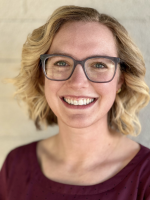
About the Guest:
Dr.Kirsten Eddy is a postdoctoral research fellow at the Reuters Institute for the Study of Journalism, a senior researcher with the Geena Davis Institute on Gender in Media, and a research affiliate with UNC’s Center for Information, Technology, and Public Life.
Episode Transcript:
Leah Dajches: There's a reason people gravitate to news stories about shark attacks. There's a big scary animal and a victim who isn't us. There's a beginning, a middle and an end. We get it, it's easy to consume. The statistical likelihood of any of us getting attacked by a shark is almost null. Meanwhile, the statistical likelihood of climate change, tax hikes or vaccine breakthroughs is almost 100%. But often those are the stories we're actively avoiding because... well, because we have news fatigue.
Matt Jordan: The US has one of the highest news avoidance rates in the world. More than 42% of Americans say they actively avoid the news. That's according to the 2022 Reuters Institute digital news report. During the second wave of Coronavirus lockdowns, there was a rise in both news consumption and trust in the news. But that was then, and this is now. While trust still remains higher than it was pre-COVID, it has fallen in almost half of the countries surveyed. Just 26% of respondents say they trust the media. So, there we are. Americans are consuming less news and are less likely to trust the news they do consume. But distrust of the media is only one of the reasons people steer clear of the news.
Leah Dajches: On this episode of News Over Noise, we'll delve into news avoidance and why it happens. We'll also share some tips on how to reengage with journalism without losing your mind. I'm Leah Dajches, a media researcher at Penn State's, Donald P. Bellisario College of Communications.
Matt Jordan: And I'm Matt Jordan. The head of the college's Film Production and Media Studies department.
Leah Dajches: We're the hosts of News Over Noise, the podcast that helps you separate inflammatory spin from good fact-based journalism. To help us unpack the causes and ramifications of news avoidance, we'll talk with Dr. Kirsten Eddy.
Matt Jordan: Dr. Eddy is a post doctoral research fellow in digital news at the Reuters Institute for the Study of Journalism, a senior researcher with the Gina Davis Institute on Gender in Media and a research affiliate with the UNC Center for Information, Technology and Public Life. She studies the interplay of journalism, politics and digital media with a focus on moral and civic media and political discourse. Kirsten, welcome to News Over Noise.
Kirsten Eddy: Thank you so much for having me.
Matt Jordan: So a topic on everybody's mind these days is news avoidance. Could you explain to us what that is?
Kirsten Eddy: It's a really great question. News avoidance has two kind of key pieces that I'll focus on. The first is the kind of idea that comes up often when we think about news avoidance in a lot of public debate and I think that is the idea that people are turning away from news altogether. There's a kind of second piece that we like to focus on at the Reuters Institute, which is what we call selective news avoidance, and this isn't necessarily people who are turning away from news altogether, but people who are instead avoiding particular forms of news at particular moments in time. And so these people may actually be, at times, avid consumers of news, but are instead turning away from particular forms of news for a variety of reasons.
Leah Dajches: I was going to jump in here, Kirsten, as I'm hearing you define news avoidance and what is selective news avoidance, I think maybe I'm just going to start off by kind of coming clean. I want to admit to y'all that I am guilty of being a selective news avoider. Unless I'm reading something about the latest news of Taylor Swift or what's going on with Florence Pugh and Olivia Wild, celebrity news, I often just find that there are certain topics I want to avoid. And so I'm just kind of wondering, big picture, what was the Reuters Institute hoping to find with this study?
Kirsten Eddy: I think there were a couple key pieces. We have increasingly found over time that people are less trusting of news in many countries, less interested in news in many countries and increasingly over time avoiding it. And so there was the kind of piece of it that we really wanted to be able to understand whether this was continuing over time, especially with some of the big stories that we've seen over the last several years around the world, I mean COVID in particular, but many others as well. And so there was that kind of aspect of it, wanting to understand and engage better with what terminology we're using when we talk about avoidance and how that looks for people and why they do it. And then I think there's the piece that you just touched on so perfectly, which is we're increasingly interested in younger audiences, as many people in many news organizations around the world are, and one of the things that we really find with them is that they have much different conceptions of what news is, a much broader umbrella of what that encompasses. And unfortunately, probably for many traditional news organizations, the type of news that people are avoiding is the type of news that most of them are producing. So as you said, when we think about what these audiences are really turning toward and away from, they're leaning toward that wider umbrella, celebrity news, culture news, science news, things like that, and they're turning away from the sort of bread and butter of politics and current affairs.
Matt Jordan: So what is it about those things that people are avoiding?
Kirsten Eddy: I think... I don't want to sort of assume that everyone has the same kind of grounding here. And of course, we look at 46 different markets around the world, so this looks different in different places. But when we ask people why they are actively avoiding news they're largely saying a few key things. They're saying that they are put off by the repetitiveness of the news agenda, so they feel that there's too much focus on things like politics and Coronavirus, they're often saying that they feel worn out by the news and a lot of them are saying that they feel that the news brings down their mood or is bad for their mental health. And I think those are the key areas that are really focused specifically around these areas of avoidance like politics, like current affairs. There's also a couple of other reasons people are avoiding, but I don't think that they're necessarily limited specifically to those forms of news.
Matt Jordan: Thinking a little bit about Leah's confession, you could say that it's not a bad thing, so that people are avoiding it to protect their mental health. Why is this a concern? I mean, what is it about avoiding the news that is a problem for everyone?
Kirsten Eddy: I think this is a really good question and it's one that we've been having a lot lately, especially as we try to parse out what news avoidance looks like compared with news moderation and what elements of it are healthy versus unhealthy. And I think that this is a really important question because yeah, there are things that are bad news for news organizations, but possibly good news for democracies or society. So I think that there's a couple key pieces here that are concerning. We generally want people to be able to be informed by what is going on. We want people to be able to feel that they have sources that they trust and can turn to for reliant, independent information around the world. And so when we hear that people are increasingly distrustful, that they're turning away from organizations because they feel that they have a hidden agenda or that they're biased, we begin to be concerned about the health of our media environments and ensuring that people are able to get news when they want it. But I think to your point, it's not bad, especially when we think about mental health and really the sort of overwhelming nature of news nowadays, it never ends, the news cycle is 24/7, and of course it's naturally exhausting for people. No one can possibly want to be bombarded with this information all the time. And so I think that there can be healthy sets of behaviors when we consume our news and we can hope to provide that to audiences and let them sort out what that looks like for them in their daily lives, but we don't want them turning away from news altogether and I think that's where we want to find the healthy balance.
Leah Dajches: It's been kind of reassuring to hear that in the 2022 Reuters Institute Digital News Report, respondents were saying that they were feeling anxious or depressed, and that's certainly something I've experienced. You know when there's so much going on in the world, the last thing you need is to be bombarded with this sense of hopelessness. And so you’ve mentioned that there are some healthy types of behaviors you can do when you're engaging with the news. Can you talk about whether it’s possible to engage with news in ways that might benefit your mental health and wellness?
Kirsten Eddy: Yeah, I don't think that there's one set of right way or right set of behaviors that everyone can do. And I certainly don't want to be too prescriptive in this way because I do think it's important for people to sort out what looks healthy to them and what my intake of news might be that's healthy for me might look different, especially as a person who studies journalism and politics all the time. I am probably in a different category from the everyday person, my parents, for instance. And so I don't think it looks the same across the board, but when we were... this year, we did some qualitative work where we actually did interviews and online assignments with younger audiences alongside the survey research that we normally do and one of the things that came up really frequently with younger people as they were talking to us about their news habits is that they did take on particular forms of behaviors that were really meant for news avoidance. They chose to pick particular moments of the day where they would not seek out, for instance, political news or they would try to specifically gear their different applications that they were using to look for news around subjects that they were particularly interested in. So I think that there are ways that you can, especially in a digital environment, try to customize your diet in a way that allows you to not necessarily always feel like you're being thrown into a world of negativity and depressing news. But alongside that should be sort of behaviors that allow you to at least get a few pieces of important news of the day. And sometimes those things will be negative. So for me, for instance, I use email newsletters for that. And I remember being shocked when I first started working for the institute and finding out all of this data, the small percentage, I think it's like 5%, of people between 24 and 35 who are using email news. I thought I was one of many. And so I think that we all find a kind of key source that we trust that we can rely on for that information without feeling like it's taking over our lives. I use email news for that. Others might use podcasts. You might have a reliable source or two on social media that you turn to consistently, but I think that we can all find ways to slowly implement that into our media diets without it kind of taking over everything.
Matt Jordan: Kirsten, how long has the Reuters Institute been tracking these trends? And I wonder is there something about the way that news is being produced or even being distributed now that's causing these numbers to go up?
Kirsten Eddy: In terms of how long we've been doing this, this is our 11th annual digital news report, our 2020 release, however, we have not been doing all of the countries that we're currently looking at. This has been two years now. Our third year was this year that we were studying 46 countries making up nearly half of the world's population now. In earlier years, this was focused specifically around a smaller cluster of countries. And as we've built, we've been able to track this information more clearly and across a more diverse range of geographical regions and political and media systems. So it's not to say that everything that we have over the last decade ties in directly to avoidance, but we do have data from 2017, 2019 and now, 2022, tracking avoidance specifically.
Matt Jordan: Is there something about the way that news is being produced now that is causing the numbers to go up?
Kirsten Eddy: I absolutely think that there are some key pieces here just about the media environment in general nowadays. First of all, I mean, as we've already talked about, news is ever present nowadays. It's being broadcast, transmitted, posted online at every second of the day. And so I think that we can't consider questions and issues around news consumption and why people are doing it or not doing it without considering the fact that it's omnipresent. We see news everywhere all the time. People have to continue to learn to manage it in different ways. Even as new platforms and technologies emerge, news seeps into it in new ways. We certainly see that with TikTok, for instance, which I don't think most people would connect to news consumption a couple of years ago and now is really a critical source of news for some of our audiences. And so yeah, I absolutely think that there are really important pieces to consider in how news is produced, how frequently it's produced, and around just the norms and practices of news. I mean, there are of course commercial incentives for producing news that journalists have to work around and work with. We want people coming to news sites. It's how they remain viable, and therefore are constantly producing in order to get the audience that they need. And so I think all these forces come together to create an environment that is draining and sometimes overwhelming for many of our audiences, but also just offers so much, so many options for people to consider when they're thinking about where to consume news.
Matt Jordan: If you’re just joining us, this is News Over Noise on WPSU. I’m Matt Jordan.
Leah Dajches: And I'm Leah Dajches.
Matt Jordan: We're talking about news avoidance with Dr. Kirsten Eddy, a postdoctoral research fellow in digital news at the Reuters Institute for the Study of Journalism. Kirsten, you describe a blurring of lines in the way that people... So for me, when I hear people are getting their news from TikTok, my old brain doesn't quite know how to deal with that. How does Reuters differentiate between something like we would think of as being news and just infotainment products in general?
Kirsten Eddy: We try to really not do that, to be honest. I think when we ask people about news consumption and news attitudes, we largely try to keep the definition as broad as possible so that for anyone who is taking our survey, they're thinking of what news is to them rather than a really prescriptive sort of understanding from our end on a particular form of news. And given what we're increasingly finding, for instance about younger audiences, we think this is the best approach one can take when it comes to surveys. All research has its limitations. And one thing with survey, that you're limited to the language that people are seeing across the board. In our case, across many, many countries and many languages. And so we try to keep that very broad. And I think that that works in our favor in a couple of ways. First being that it allows us to again, keep that understanding to the sort of individual user as they're thinking through their responses. And second, that when we ask a bunch of questions about what different formats they're getting news from, what platforms they're using online, whether they're consuming traditional forms of media, things like that, that they can individualize their answer based on those perceptions.
Leah Dajches: As we're talking about the individual users and where we're getting our news from and how we think of news, one primary reason why I choose to slightly avoid the news is because I tend to get news that's vastly different from the news that my family gets. And so it can be very difficult to engage in conversations with them when I know my news, and I feel weird saying "my news," is so different from the news that they're consuming. Is that something that was measured in the survey or that you've come across in your own research?
Kirsten Eddy: Not exactly. But one thing that I was thinking of as you started to talk about it is one of the areas of why people say that they avoid the news that did come up fairly frequently, especially around younger and less educated audiences, is the idea of news being hard to understand. And I don't think this necessarily gets exactly at what you were just talking about. But I think one piece that it was talking about is how nowadays as a lot of people get news from a variety of sources, often that can be entirely disconnected from one another and are increasingly getting information from conversations with family and friends... certainly we all have family members who the way that they get news is by hearing it from their partner or from their parents. As that happens, people are missing a lot of the context that comes with that sort of background explanation of news, are missing these key pieces of information and instead, it's like a constant game of telephone. Because of that, people are feeling like it's hard for them to follow news when they don't have the same... they're not all working from that same background level of knowledge. And so I don't think this necessarily gets at exactly what you were saying, but I do think it's an important component when we think about how we are participating in or sharing news in our everyday lives. That yeah, we're not all working from that same common base of knowledge.
Matt Jordan: Kirsten, this was a multi-country study, which is fascinating, to see the range of things. And obviously, the fact that the United States ranks highest among news avoiders is a little bit troubling. So I'm wondering, what are other countries with lower news avoidance levels doing that journalists might want to start thinking about doing in America?
Kirsten Eddy: This is such a great question. I wish I had all of the perfect answers so that all of our countries that are struggling with avoidance could adhere to it. I don't have a perfect set of best practices, but I think one thing that we do see consistently when we look at low avoidance countries is that they're often high trust countries. We see this, for instance, in Finland and some of our Nordic countries that are markets that have higher levels of interest in news, higher levels of trust in news. And that's sort of a broad question of if people trust most news in their country most of the time. So this is no particular brand, it's just whether people trust the news media in general in their country. Those markets have often lower levels of active news avoidance. And on the other hand, in countries like the US for instance, we see the highest levels of selective avoidance and news disconnection, people who are entirely turning away from news along with low trust and low interest in news. So while I don't think that this illuminates a particular set of behaviors that news organizations can replicate in other countries... I mean there are certainly some pieces of this that are just unique to the US, its high levels of partisan polarization, the very diverse and fragmented news environment that we're a part of. All those things are hard for journalists to work with. But I think there are a couple of practices that do seem to be working. People do seem to be interested in forms of more constructive or positive news that looks like a range of things in many countries. But increasingly, we talk about things like solutions or constructive journalism that are focused on offering people clear sets of practices or ways that they can feel like they are able to act upon the news that they're hearing. When it comes to, for instance what we were talking about earlier, of news being hard to understand, explainers and things that break down complex ideas into simpler forms of information certainly draw people in. And then I think aside from that, when we're thinking about those who are getting news and information from platforms for instance, we do see lower levels of avoidance and higher levels of trust among younger audiences, for instance, who are looking at content that's native to the platform. So news organizations that are providing information that's actually made for the platform they're performing on, not just taking their broadcast or their online news stories and trying to make it fit platform. We see a lot higher engagement with audiences when they're curating their content around the audience they're trying to reach on the platforms that they're working with.
Matt Jordan: I'm going to ask a follow up question. We're on a public radio station here, and just by looking at some of the countries that have low levels of news avoidance, it looks like they have stronger public media. Whereas in the wild west of the deregulated American landscape, we have incredibly high levels of news avoidance. Do you think there's a corollary, or would you dare to speculate that there's a corollary there?
Kirsten Eddy: I have no doubt you are correct, that there is absolutely a relationship there. You are completely correct in finding that many of the countries that we find with lower avoidance, higher levels of trust, higher news consumption, are often in areas with a strong public service media. And particularly when it comes to even just looking at brand, trust for instance, we largely see that countries that have some form of public service media or a public service broadcaster, for instance as you said, many of our countries are Nordic countries. Even in the UK, we tend to find that the public service media are among the most trusted in those countries. They're often the most used by far in those countries. So I certainly think that there's an important set of relationships there that are missing from other countries that don't have that same infrastructure.
Matt Jordan: You said the news cycle is relentless, right? That one could say that we live in an attention-based economy, and in order for the news sources to be viable, they have to get people's attention, and the phone is feeding information and it's all competing for that attention. If you think about ways that we could moderate our news consumption, might possibly we look for... like you said, you go for a newsletter, because that's something that is manageable and contained. And I hate to sound nostalgic but it used to be, a long time ago, that most people just watched a half hour news show every day, as opposed to giving yourself to a 24-hour feed. Are these strategies that people should be thinking about when they're moderating their news consumption?
Kirsten Eddy: I certainly think that it is important for people to keep these things in mind as they're thinking through what to consume. And yeah, I mean, I think it's hard not to be a bit nostalgic about a period of time in which you didn't really have to make certain decisions around what you were going to consume and where you were going to get it. I think there is also a lot of positives in the amount and the breadth of choice that we have nowadays. I think that when we think about where people are consuming news, a lot of times they will have particular sources that they turn to based on the type of information they're looking for. What my friends who are interested in sports are turning toward for that probably looks very different than what they're going to go to for the news of the day or for the big political piece of information that's coming out. I think that as people are considering their news options, as I said, unfortunately we don't have all the answers as to exactly what that should look like and what specifically people should be doing. But I think that as they're thinking through those choices, they are able in a way that they weren't before to think about turning that into a slightly more manageable understanding of like where am I going to go for this topic or this source of news that interests me. Hopefully that's a way to continue to generate interest in news. Especially if we think about news as a much broader umbrella than simply current events and politics specifically, this allows a lot of room for people to create a variety of content around many different topics and areas of interest, which may be overwhelming to the average person. But I think as you increasingly find a media diet instead of habits that work for you, I think you eventually narrow into what you feel that you enjoy and trust the most and hopefully that means more opportunities for a broader range of news providers.
Leah Dajches: So Kirsten, to kind of sum up some of these tips and strategies, it sounds like as consumers we should be shifting away from selectively avoiding news and maybe more selectively or strategically curating our news consumption.
Kirsten Eddy: I think that's a perfect idea. Yeah, I think that that is a really nice way to sum it up. It allows for people to perceive news consumption as more of an active choice in their life and to be able to create a set of behaviors that match their level of interest. As you two both pointed out earlier, it's not realistic of us to assume that people want particular forms of information at all points in time and all hours of the day. And, there are forms of avoidance that may be better for the individual person, even if it means it's detrimental to news organizations that are trying to build those audiences. I think those two things can be held hand in hand. But when you think about the average individual doing these things, yeah, I think that your description of it allows a stronger sense of agency for them. It allows for them to think of news consumption as a thing that they are actively choosing to do, especially when so much of news consumption nowadays is that ambient kind of thing that's just being thrown at you all the time. It's hard to convince yourself at times to actively seek it out when you know it's probably just going to come to me anyway. But we also know that that doesn't allow for engagement with news. It doesn't allow for trust in particular sources. It doesn't even really allow for you to choose what types of information you're getting. I think that sort of form that idea of active curation, active moderation are probably practices that are healthy for people to think about.
Matt Jordan: Are there any trends that you studied, almost a hundred thousand folks all over the world, are there any trends that you all look at and say, this is a good thing, that's something that you feel something could be built on?
Kirsten Eddy: Yes. I believe I mentioned this before. I think that as we see, in the wake of COVID in particular, I think we really saw a rise in things like Q&As, explainers, these sort of bite-size packages that really allow for people to get a baseline of information that I think we often assume everyone knows, but is not actually realistic for many people to know. I think that there's a really great set of opportunities there.
Matt Jordan: Kirsten, thanks so much for being with us. Thanks so much for sharing all this interesting thing to think about. And thanks again.
Kirsten Eddy: Yes, my pleasure. Thank you for having me.
Matt Jordan: So Leah, you started out today confessing that you avoid the news, and I'm wondering if having listened to this, you have any strategies that might make you tune in instead of tuning out?
Leah Dajches: Well, absolutely. I think the first takeaway for me from this interview was kind of validating that just because I'm choosing to selectively avoid certain news topics or stories doesn't mean that I'm a bad citizen or that I'm doing something wrong. But I think listening to Kirsten today really gave me this kind of almost rhyme to think about when I'm wanting to consume the news or I'm ready to. It’s this idea of moderation, curation, avoid sensation. You know consuming in moderation, the curation of the news that you're consuming, and really just focusing on trying to avoid news stories that are sensationalized is something that I want to think about and have at the forefront of my mind when I'm opening up and looking at my news media landscape and I'm wanting to be informed and educate myself on current events.
Matt Jordan: That seems like a smart strategy. I mean, the more we realize that it's the emotional manipulation that is making us nuts, I think the more we can be deliberate and mindful about the news we consume.
Leah Dajches: So that's what I'm thinking. Matt, what's one thing that you are taking away from this?
Matt Jordan: Well, it seems that people avoid news when it's not helping them, when it's not giving them some handles on their world and just riling them up. So I think to me, it's those things. It's going to raise a red flag when it's not helping me figure things out. It's not giving the solutions, and I'm going to seek out sources that do that, and that don't leave me wanting more or feeling helpless.
Leah Dajches: That's it for this episode of News Over Noise. Our guest was Dr. Kirsten Eddy, a postdoctoral research fellow in digital news at the Reuters Institute for the Study of Journalism. To learn more and to hear an extended version of this interview with additional content, download the podcast at wherever you subscribe to podcasts or at news over noise dot org. I'm Leah Dajches.
Matt Jordan: And I'm Matt Jordan.
Leah Dajches: Until next time, stay well and well informed.
Matt Jordan: News Over Noise is produced by the Penn State, Donald P. Bellisario College of Communications and WPSU. This program has been funded by the office of the Executive Vice President and Provost of Penn State and is part of the Penn State News Literacy Initiative.
[END OF TRANSCRIPT]
Episode Credits:
Producer: Lindsey Whissel Fenton
Audio Engineers: Mickey Klein, Scott Gros, Clint Yoder
News Over Noise is a co-production of WPSU and Penn State’s Bellisario College of Communications. This program has been funded by the office of the Executive Vice President and Provost at Penn State and is part of the Penn State News Literacy Initiative.