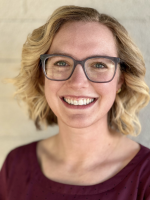
About the Guest:
Emily Ramshaw is the CEO and co-founder ofThe19th*, the nation’s first independent nonprofit newsroom at the intersection of gender,politicsand policy. The 19th* aims to elevate the voices of women and LGBTQ+ people — particularly those left at the margins of American media — with free-to-consume and free-to-republish daily journalism,newslettersand live events. Prior to The 19th, Ramshaw was editor-in-chief of The Texas Tribune, an award-winning local news startup and the largest statehouse news operation in the nation. She is on the board of the Pulitzer Prize, where she is serving a nine-year term. In 2020, Ramshaw was namedtoFortune’s “40 Under 40” list.
Episode Transcript:
Leah Dajches: On August 18th, 1920, Congress ratified The 19th Amendment legally granting American women the right to vote, or more accurately, legally granting some American women the right to vote. Millions were excluded from this pivotal moment in our democracy, particularly women of color. More than 100 years later, many individuals still face barriers to voting, especially transgender Americans. While women make up more than half of the American electorate, they remain underrepresented in government as well as in boardrooms and newsrooms. The underrepresentation of women and LGBTQ+ individuals in politics and policy journalism as well as in newsroom leadership can have a major impact on the news that reaches you. People in those positions influence what stories are told, how the news is covered, and whose voices are elevated.
Matt Jordan: Enter The 19th, the nation's first independent nonprofit newsroom at the intersection of gender, politics, and policy. This organization aims to be a source of news and information for those who have been underserved by and underrepresented in American media empowering women and LGBTQ+ people, particularly those from underrepresented communities with the information resources and tools they need to be equal participants in our democracy. Here to talk with us about this new approach to journalism is Emily Ramshaw, the CEO and cofounder of The 19th. Ramshaw previously worked as editor in chief of The Texas Tribune, an award-winning local news startup and the largest state house news operation in the nation. In 2020, Ramshaw was named to Fortune's 40 under 40 list, and she currently serves on the board of the Pulitzer Prize
Leah Dajches: Emily, welcome to News Over Noise.
Emily Ramshaw: Hi. Thanks so much for having me.
Leah Dajches: I want us to start by talking a little bit about The 19th. Can you tell us a bit more about the project and what it inspired its creation?
Emily Ramshaw: Yeah, sure. So, The 19th is the nation's first national, nonprofit newsroom at the intersection of gender politics, and policy. We launched in 2020 really at the beginning of that crazy election cycle with the aim really of lifting up the voices of women and queer people, particularly those from marginalized backgrounds in legacy media. And really it was a response to, dating as far back as the 2016 election, so much we saw in media coverage that really minimized the experiences of women and LGBTQ+ folks that ask questions like, “Is she electable? Is she likable?” So many questions that we found so fundamentally sexist and, in many ways, racist, and so we really thought about whether there was a new way we could advance storytelling, advance media in the United States that centered the lived experiences of those who were left at the margins.
Matt Jordan: You worked before at The Texas Tribune, which is another nonprofit. What did you learn there working there that you brought with you to The 19th?
Emily Ramshaw: The first thing I learned is that the nonprofit business model worked for American media. I mean, I think I grew up in the era in American media where people were losing their jobs right and left you. It's funny. It feels almost quaint compared to how bad it's gotten today. But I spent the early years of my career worried that I was going to get laid off from a regional newspaper, that I was going to be in my mid-forties with a kid at home and suddenly be unemployed. And I think The Texas Tribune really felt like a lifeline to me. It felt like a new way to seek sustainability in American media. And so, I learned over my 10 plus years there about the different ways to build a revenue model that felt sustainable in a tough environment, a combination of philanthropy and corporate underwriting and membership. I learned what it meant to build a really robust live events business The Texas Tribune really modeled through The Texas Tribune festival and a lot of its programming ways to engage your readership with the people who represent them and what that could look like. And so, I really learned a new way to think about how we sustain media in this country in a way that I picked up and ran with when we started The 19th.
Matt Jordan: And just to flip that a little bit, what do you think that the for-profit sector that is not following that, what is it doing that you don't want to emulate?
Emily Ramshaw: So, what has happened in a lot of for-profit media is an obsession with what I call either clickbait or hate reads or the most extreme views. So many of those business models are rooted in the declining advertising dollar in digital media, which means you need basically as many eyeballs as possible on each individual piece of content in order to make those advertising dollars’ worth your while. And I think that incentivizes the wrong things. To me that incentivizes this echo chamber mentality. It incentivizes headlines that are incendiary or angry or mean. It incentivizes the most outlandish opinions or really rewriting news of the weird. And for us what we wanted to do was really tell engaging and nuanced stories. Stories where there's a lot of gray areas or divergent opinions. Stories that made people smarter. And the reality is when you have a traditional advertising model, the wrong types of stories are incentivized. And so that is what a nonprofit model liberates us from because the dollars that come in are people supporting us for the quality of our work, not for how many individual eyeballs are on a story.
Leah Dajches: So more specifically, how does that nonprofit designation impact the types of stories you cover? Is it more of a freedom in terms of getting to choose what you think would be valuable or important or can you speak a little bit more to that?
Emily Ramshaw: Yes. I mean, it allows us to really incentivize coverage of things that are under covered. I mean, so, for example, for us the intersection of gender and poverty. Maybe not the most read stories on your website but critically important stories. The intersection of gender and criminal justice or gender race and criminal justice. There are so many important stories. We deeply cover the disability community, for example, which is we cover caregiving. These are not beats that major legacy newspapers have necessarily prioritized. And The 19th has been able to give those topics real deep and compelling and meaningful airtime because of our nonprofit model, which again allows us to choose undercovered things to feature and to focus on underserved communities. Communities that are not necessarily the priority of for-profit news organizations that are so dependent on advertising.
Matt Jordan: I was noticing—because I was looking through last night—and I was noticing a great article about paternity leave. And it struck me, this doesn't seem like a match for a women-focused—so your niche, your focus on women's issues, how does that help the audience in terms of understanding things like paternity?
Emily Ramshaw: Yeah, absolutely. So, one thing that you might be surprised to know is that close to 50% of our readership is actually male. And we think that's great news. We think that's a great sign because gender issues, women's issues, women's equity, gender and racial equity matters to everybody. It doesn't just matter to one segment of the population. And so, I think stories like paternity leave, I mean, if you think about the value to women when husbands, when men also can share the duties of caregiving and are given the space and time to do that, what does that do for women's economic opportunities? What does that do for equity in the workplace? What does that do for career advancement? I think there are a lot of stories that may not necessarily be exactly about women or about queer people, but they serve our audiences. They serve the women and queer people who are reading The 19th journalism. And so, we really think about an expansive view. Equity means everybody, and that's how we think about our storytelling.
Leah Dajches: I like that quote, "equity means everybody." And thinking about The 19th, you actually have an asterisk next to The 19th. So, for those who don't know, can you explain to us what that symbolizes?
Emily Ramshaw: Yes, so I'll start with what The 19th itself signifies because you will be stunned at how many people do not know what the 19th Amendment to the Constitution did. And the 19th Amendment made extended the right to vote to everyone regardless of their sex. Now, what the 19th Amendment didn't do, which is what the asterisk is for, is the 19th Amendment extended to white women. It did not extend to women of color. Obviously, there was no debate then around you know trans rights and the identities and ID cards of different kinds of voters. So, the asterisk in our logo is really this representation of the unfinished business of the 19th Amendment. The 19th Amendment took one step. There were still a lot of steps needed to take, and I'd argue we're still very far away from full equity. We see voter suppression that affects women of color in states across the American South. We see trans voters who struggle to vote with the IDs that are attached to their identities. So, I think the asterisk to us really points to these intersections and these areas in which the 19th Amendment actually did not go far enough.
Matt Jordan: As I was thinking a little bit about your mission statement you say serving the public interest is a big concern of yours. And I was thinking about this in relation to the reframing of the stories that you do to basically to cover your mission. And so just as an example to think with how do you think that your focus on topics like the economy makes those better stories for everybody?
Emily Ramshaw: Absolutely. I mean, I think one of the very first stories we wrote, actually, the very first day of The 19th in operation—so we launched during the pandemic. And we wrote a story about the pandemic's shecession, which is this recession that hit women so much harder than it hit men. And for us, that is a story that affects more than 50% of the American population. This isn't a niche women's issue. There is so much we can learn from the caregiving economy. We write a lot about long-term care and elder care and how so much of that work falls to women. We wrote about during the pandemic how hard hit the hospitality industry was, which overwhelmingly affected women compared to men. There are so many ways in which the economy is already gendered, and we think those kinds of stories are so important to tell. And, I think, even going beyond the economy, there are so many areas. Gender and climate is a priority for us. I think a lot of people might not think that climate is necessarily a gendered issue. The majority of climate refugees are women. When you think about issues like extreme heat, people who can get pregnant are affected by extreme heat in ways that people who aren't pregnant are not. In virtually every arena, it became so obvious that The 19th was necessary because whether it's public education and disparities in achievement between girls and boys, or higher education in the ways that we see women enrolling at higher numbers now than men, in so many cases women are either disproportionately affected or there is an outsized impact, and there are so many critical stories to tell at those junctures.
Matt Jordan: I agree. And one of the things that I find really helpful with it is that the ways that the mainstream media or whatever one wants to call it, the normal modus operandi of journalism it often frames stories in exactly the same way. So, it's just all that changes are the details of it. And I think one of the salutary things about reframing stories in this way is that it brings them to life again and helps people understand the fuller context of those as opposed to just is the Dow Jones up or down on a given day.
Emily Ramshaw: Yeah, and I think that's such an important point because there is so much of this conversation in American media right now around objectivity. Is it the responsibility of the news to be objective? And my question to that is like, ‘Whose view of objectivity?’ Because for most of American history, the stories that have existed in media have been largely told through the lens of men and overwhelmingly white men. I mean, until a couple of years ago, still 70% of politics and policy editors were men. The overwhelming majority were white men. And so, their quote unquote, "objective lens," they're the ones deciding what's news and what isn't news, whether something plays on the front page or the home page, who's quoted in those stories, what kind of sources are represented, and how we decide whether something is worthy of going viral.
Leah Dajches: If you’re just joining us, this is News Over Noise. I'm Leah Dajches.
Matt Jordan: And I'm Matt Jordan.
Leah Dajches: We're talking with Emily Ramshaw, the CEO and cofounder of The 19th, the nation's first independent nonprofit newsroom at the intersection of gender, politics, and policy. You know, objectivity is something that we've discussed actually quite a bit on the podcast. And in thinking about this idea of giving your audience a fuller context, do you have a certain mindset or approach you take to objectivity with the news stories from The 19th?
Emily Ramshaw: We do. We call ourselves an independent nonprofit newsroom. That's a lowercase i, independent, that's not a political party Independent. And what that means for us is we cover everybody without fear or favor, but we're also not afraid to say that there are things that we stand for. And we stand for gender equity. We stand for human rights. We stand for racial equity. Our stories are rooted in science and evidence and fact. We don't play the both sides game if one side is spewing misinformation or hate. And we don't think those things are mutually exclusive. We really do believe that our version of objectivity is allowing our journalists to bring their full lived experiences to the work so that the product that's out there in the world, so that our media feels more diverse and representative. And so, I think, you've seen more and more news organizations now getting away from this word nonpartisan and moving into this word independent, even The New York Times now uses independence as its mantra. And, I think, we feel like there's great value in saying we're not afraid to stand for something that doesn't mean we're partisan, or putting a thumb on the scale, it just means that we're human beings.
Matt Jordan: It's interesting. You say that what you talk about in your values and which seem to change. And I was just wondering—when I was watching the Breaking the News, which is for all of our listeners out there, it's a great doc about The 19th getting stood up during the pandemic. And one of the sections of it is as a place where you all as an organization struggled with this in terms of who gets to count as women. So, a traditional thing in feminism is that there was a moment when it was feminism was just white women. And they had to broaden the tent. And it was interesting to watch you all struggle through that and to come to terms. So, are there other issues that you—when you have your group meetings and think about the organization where its direction is, do you work through these issues constantly?
Emily Ramshaw: Absolutely. I mean, I think, one really critical piece of The 19th's mission and brand is that we have those difficult conversations and we're open to an evolution. I mean, as an example you noted this in the documentary, when we founded The 19th, we were thinking women, politics, and policy. And then we hired extraordinary queer trans and nonbinary colleagues who immediately said, wait a second, we feel misgendered by this framing of The 19th and also the same way that women are crushed by the power of the patriarchy, queer people are feeling that crush too. And so, we intentionally expanded our mission to say we don't just serve women, we are here to serve women and members of LGBTQ+ communities. We made, I'd say, a similar pivot or staff conversation after January 6th. When we launched, we had used the terminology nonpartisan. And after January 6th, we felt like the term nonpartisan was co-opted to mean both-sidesism. And we felt like that was a moment in history where our democracy was on the line, and you couldn't sit on the sidelines. And so, we changed our framing to say independent instead of to say nonpartisan because we were no longer going to platform people who questioned whether the election was stolen or rigged, or outlandish completely preposterous claims. And so, I think we've had moments like that over the course of The 19th. I think what's really significant is that, I think news organizations need to listen to their staff. They need to challenge their own identities and their lived experiences. I mean, I'm a white woman of privilege, a straight, white woman of privilege running a news organization that is 60% BIPOC, that is 40% queer identifying, that has 19% people living with disabilities. I don't know best. My team knows best. And I really value their voices and their lived experiences and how we all do this work communally.
Leah Dajches: I think that's a really refreshing perspective. And something that I've noticed throughout our conversation so far with you already—I think it's been 15 minutes—is there seems to be this focus you have on transparency and really providing fuller context to the stories and your approach to news. And I noticed in your mission statement it says at The 19th we're committed to publishing journalism that you can trust throughout the critical moments that shape our democracy and our lives. And so, I'm wondering what are some of those additional ways that you're working, that The 19th newsroom is working to cultivate trust?
Emily Ramshaw: Absolutely. One of the things we think about a lot with trust is debunking myths and disinformation which feels critically important for our audiences, particularly the people of color who we serve. So, we think about that a lot. We do a lot of journalism that is I would describe as explainers, or it's not super complex but it's news you can use. It's how to find out if you qualify for the child tax credit, for example, or how to get baby formula when there are shortages in your particular state. We've done journalism on diaper poverty in the Ozarks that led to enormous contributions and donations to women who were experiencing diaper poverty, which I didn't even know that was a term, that was a thing. And, I mean, that's the most horrific to be unable to provide diapers for your baby, it's next level. And so, I think, we think about that a lot. We also really ask our audiences what they need. We do a lot of, I think, as we've seen, pivots away from people just directly visiting news websites in favor of other platforms or social media. We use Instagram. In some cases, we tell stories just on Instagram instead of on our website. Because we have such robust audiences there, we can almost do it completely in a series of cards that let them engage with that. I think we're really committed to meeting our audiences where they are, to letting them drive. Respond to this call out. Tell us what you're looking for, what questions you have, how we can help serve you. And I think really being transparent about the fact that they are the customers, they're the guides, they're the people we're trying to serve. How do we serve them and serve them most equitably? One other piece I wanted to just mention was you mentioned transparency. And I think that is one other thing I really learned from The Texas Tribune, which was amazing about saying, here are the people who are paying our bills. Here are the people who are supporting this organization. Here's how you know whether someone in this story is also supporting The Texas Tribune. We do that at The 19th. We list all of our donors and supporters on our website. If anyone is mentioned in a story, named in a story, we disclose that in the story. It is really, really critically important to us to say we're showing you, the readers, literally everything. Any place you might perceive that there could be a conflict of interest or a thumb on the scale, we feel like the best antidote to those kinds of questions is complete and utter transparency.
Matt Jordan: And, I think, that's right. You're mentioning something that sounds a lot like what some people call the citizens agenda model for journalism where you ask people, what are the problems that you want to help in solving? Is there an example that you could give? I mean, sounds like the diaper one was an example, but is there another example of a recent story that came from listening to your audiences and serving them and helping them solve things?
Emily Ramshaw: Well, here's one example. Recently, one of our reporters, Shefali Luthra, got a tip out of the State of Arizona that there was about to be a major abortion case coming down in Arizona and that the judge overseeing that case is someone who had written previously that abortion was genocide, had a very long history of publicly opposing abortion in the State of Arizona. Shefali wrote a really important story for The 19th about this situation and about how this judge was refusing to recuse himself from the case. That story was co-published by news organizations on the ground in Arizona through The 19th free republishing model. The story got so much attention on the ground that Shefali was then asked to go on local media, local radio to talk about this particular case. There became such a furor that the judge was eventually forced to recuse himself from this case. And I used that as an example of something that would not have happened if not for The 19th listening to its audience, if not for a reporter diving into this issue, if not for our free republishing model that lets local news organizations across the country republish The 19th journalism. And then there was the follow-up and actual action was taken. And so, I think about that as just—that just happened about last week, and so that's maybe a more modern example of The 19th effect in both national and local journalism.
Leah Dajches: You know as someone who's I'm kind of a data geek. I'm really interested in audience analytics. And just I'm curious how does The 19th go about listening or asking those questions of their audience. Is it using data metrics or more qualitative work?
Emily Ramshaw: Yes, so a couple of different ways. The first is we run an annual audience survey, which is a lot of work. We even do things like sometimes offer gift cards for participation. You really have to be really intentional. And every single year, we do an audience survey where we try to get a ton of results from our existing readers. We do that. But there's also the qualitative, which is we do these audience call outs. We create a form, tell us about your experience with student loans and how the pullbacks of loan forgiveness are going to affect you? Or talk to us about your experience accessing baby formula during this shortage? We do a lot of that across social media and get people who literally either respond to our call outs or respond—hit reply to an email newsletter just telling us about their experiences. So, I think it's a combination of all of that. We are a very data-driven organization. We have an extraordinary audience team and a person who runs analytics for us. We do make a lot of decisions based on what we know about our audiences. But we also lean into the qualitative, which is how we get some of our best story ideas.
Matt Jordan: So, this is partially a kind of to that, which is I was going to run a news organization which is different from being on the ground and whatnot. And what are the challenges do you think in today's media ecosystem for standing up a new brand and building brand awareness and getting new audiences? What are some of the challenges in getting the word out?
Emily Ramshaw: Yeah. I mean, well, the first are I would point to big challenges that all media is facing right now and that is really the way that platforms are evolving. I think you see that the social media platforms, whether it's Twitter now X, Facebook, Instagram. In many cases, these platforms have moved away from prioritizing news. They're actually trying to get out of the business. They don't want to be the arbiters of what's true and what isn't. And so, as a result, they have basically been using their algorithms to back away from news entirely. And so, what that means is that our historical way of reaching audience, many of whom found us on Facebook, or found us on Twitter, those numbers have declined dramatically. With the evolution of AI, for example, pretty soon if not people are going to be asking for the information they're looking for and getting those results written to them in a paragraph instead of getting a list of search results. And those lists of search results, by the way, are how most news organizations historically have had people find them through Google search or whatever search platform you use. So, there has been this sort of—and then we're also dealing with the overserving, people who are exhausted by the news cycle. The news cycle is painful. It's hard. They are retreating into softer topics. And so, I think all of these things combined means that news organizations across the board have seen declining digital traffic and have had to rethink how they serve people, how they find their audiences. So, for us, that's a combination of deprioritizing views on our website in lieu of finding people on Apple News or Samsung News, republishing with all the platforms, republishing across as many local news organizations as we can where people still really do trust their local news organization. And then using Instagram the way I was talking about, our social media platforms, TikTok to tell stories in complete ways in these different capsule environments. So, I think our responsibility as news organizations right now is to serve our users wherever they may be. Again, I think, that's an area where nonprofit newsrooms actually have a leg up because we aren't as dependent on the digital advertising traffic that so many for-profits are. So that's one big challenge, I'd say, which is just news delivery is changing. For the nonprofits, the other big challenge is financial sustainability. And, I think, as the CEO, I spend a ton of my time, 70% of my time fundraising. And, I think, you see more and more nonprofit newsrooms in this space many of whom are competing for the same traditional philanthropic dollars. I think we also struggle to find and convince new funders that journalism is something worth investing in that if you care about democracy, if you care about LGBTQ rights, or if you care about women's rights, that journalism is also something you ought to care about. And, I think, that's where I see my responsibility being the greatest.
Leah Dajches: You may have already answered my next question, but it's so I subscribe to the newsletter, and I love going on your website. I'm very passionate about the work that you do. And so, I'm just excited to hear more about what's next? What do you hope for the future of The 19th in terms of is it finding ways to get more on social media? Is it breaking into new sectors of coverage or new beats? I'd love to hear more.
Emily Ramshaw: We are really singularly focused on 2024, which feels seismic for so many reasons but also seismic for our audiences. And so, I think we are we're trying to take it one year at a time. We're going to be undergoing our first strategic planning process. We're almost four years old, and so it is now time. Our initial sort of three-year plan has run its course. You start a three-year plan, and then it looks nothing like what you thought it was going to look like. And that's the case for us too, but we really are, I think, singularly focused on two things in the next year and that is devising what the next three to four years of The 19th are going to look like. And that means revising what our business model looks like but also what our delivery model looks like, all those things I was talking about with where we serve our audiences. And then the second piece is election storytelling. I mean, we are a political newsroom. The 2024 election is a be all end all for us. And so given the things that we cover, voting rights being central to our name and our mission and our brand, reproductive health we know being essential to the last two elections. And I think lots of questions about how big of a role the women's health vote will play in the 2024 election. And then also just the attack on LGBTQ rights in this country, which is really animated and been a real point of defense for the Left. So, I think that's something we're also deeply covering across the country. Those are the big things on the horizon for us.
Matt Jordan: I notice in your mission statement, which is something that I think is wonderful, which is that you say you don't want to do horse race coverage. So, what is your strategy as you move into covering the election where the stakes are going to be huge, where the emotions are going to be too? How do you avoid doing horse race coverage as you negotiate next year?
Emily Ramshaw: Yeah, the answer to that is pretty simple and that is we focus on the voters not the candidates.
Matt Jordan: Emily, I'd like to thank you so much for joining us today.
Emily Ramshaw: Thank you so much for having me. This has been really a great conversation.
Leah Dajches: Wow, I feel like I just learned so much talking with Emily. During our conversations, I'm always jotting down notes of things to remember, and I just have so many fantastic quotes that I want to remember. Matt, what was one of your takeaways from today?
Matt Jordan: First, it's great to hear somebody who's worked with some really great news organizations, who knows the ground really well talk about these things. And for me, the takeaway is you learn about good journalism by reading good journalism. So, for all those in the audience, sign up for the newsletter. It's a good thing to start seeing news that is portrayed, that is framed in a different way. And you?
Leah Dajches: Yeah, so I'm looking at my quotes. And one that I just feel like I want to star is this, Emily ended with, "people trust the news more when they see themselves in it." And as someone who studies media, equity, diversity, and representation, that's so important that when we see ourselves reflected in the news, we tend to trust it. We tend to maybe become even more involved in thinking about our role in the political process. And so, I think that's so important for journalists and newsrooms more broadly to be thinking about how can we be including underserved and underrepresented voices and putting them, bringing them to the table. That's it for this episode of News Over Noise. Our guest was Emily Ramshaw, the CEO and cofounder of the nonprofit newsroom, The 19th. To learn more visit newsovernews.org. I'm Leah Dajches.
Matt Jordan: I'm Matt Jordan.
Leah Dajches: Until next time, stay well and well-informed.
Matt Jordan: News Over Noise is produced by the Penn State Donald P. Bellisario College of Communications and WPSU. This program has been funded by the Office of the Executive Vice president and Provost at Penn State and is part of the Penn State News Literacy Initiative.
[END OF TRANSCRIPT]
Episode Credits:
Producer: Lindsey Whissel Fenton
Audio Engineers: Mickey Klein, Scott Gros, Clint Yoder
News Over Noise is a co-production of WPSU and Penn State’s Bellisario College of Communications. This program has been funded by the office of the Executive Vice President and Provost at Penn State and is part of the Penn State News Literacy Initiative.