About the Guests:
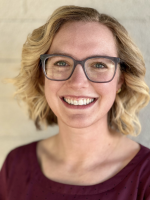
Angel Ellis is a Citizen of the Muscogee (Creek) Nation and has lived, worked, and played within the tribes' reservation boundaries most of her life. Growing up, her heroes had press passes rather than capes and inspired her to become a journalist. Ellis became Director of Mvskoke Media in 2020. In 2020 she joined the ranks of Elias Boudinot Free Press award winners, an award given by the Indigenous Journalist Association to those who defend press freedoms. In November 2022, the Local Media Association (LMA) recognized Ellis during Native American Heritage Month as one of the Indigenous people "who have positively influenced and enriched the United States." In January 2023, the film "Bad Press" premiered at Sundance. This film follow’s Ellis’s advocacy work and was selected as the Sundance Special Jury Freedom of Expression Award. She remains dedicated to serving her community as Mvskoke Media’s Director and has consulted some of the most high profile media companies in the world on best practices for Indigenous storytelling.
Rebecca Landsberry-Baker is an enrolled citizen of the Muscogee (Creek) Nation and the executive director of the Indigenous Journalists Association. She is a recipient of the 2018 NCAIED “Native American 40 Under 40” award and was selected to the Harvard Shorenstein News Leaders Fall 2022 cohort. Landsberry-Baker made her directorial debut with the documentary feature film, BAD PRESS, which was supported by the Sundance Institute, Ford FoundationJustFilms, NBC, and the Gotham. BAD PRESS premiered at the 2023 Sundance Film Festival and received the U.S. Documentary Special Jury Award for Freedom of Expression.
Episode Transcript:
Leah Dajches: Although the US Constitution guarantees the right to a free press, Indigenous nations craft their own constitutions. And less than 1% of Native American tribes have a provision guaranteeing a free press. To say this puts reporters in a tough spot is an understatement. These journalists face intense pressure to keep coverage of tribal governments in a positive light. In November of 2018, the employees of Mvskoke media, the tribal affiliated news outlet for the Muscogee Creek nation in Oklahoma arrived at work to news that free press on their reservation was at risk. You see, Mvskoke media had just investigated the speaker of the national council for sexual misconduct. And that speaker had introduced an emergency measure to the tribe's autonomous governing body to repeal its landmark free press bill. The staff of Mvskoke media immediately started documenting their concerns as captured in the breakout Sundance documentary, Bad Press.
Matt Jordan: We're going to talk with Rebecca Landsberry-Baker, one of the directors of the film and Angel Ellis, one of the featured reporters. Both are citizens of the Mvskoke nation. Rebecca is the executive director of the Indigenous Journalists Association. Bad Press is her directorial debut. It premiered at the 2023 Sundance film festival and received the US documentary special jury award for freedom of expression. Angel has lived worked and played within the tribe's reservation boundaries for most of her life. An award-winning journalist, she remains dedicated to serving her community and has consulted some of the most high-profile media companies in the world on best practices for Indigenous storytelling.
Leah Dajches: Hi, Angel. Hi, Becca. Welcome to News Over Noise.
Angel Ellis: Thanks for having us. I'm so excited to chat.
Rebecca Landsberry-Baker: It's true, I'm so happy to be here.
Leah Dajches: We'll get into it. I'd love if you could tell us a little bit about what events inspired the documentary, Bad Press.
Rebecca Landsberry-Baker: Sure, I can take that one first. So back in 2018, I was actually serving on the Mvskoke media editorial board. And when I heard the news of this repeal of our allotted free press protection as one of only five tribes out of 574 here in the US that had free press protections, the Muscogee Creek nation was one of them at the time. And so, I heard the news that the Muscogee Creek nation national council was planning on possibly repealing our free press law. And so of course, I was on high alert at that time in my position, as you know, president of the editorial board. And so, I wanted to keep up with what was happening. And so Mvskoke media was covering the vote itself. So, I don't know how many-- how much we want to get into any spoilers. But I think it's probably important to know for this purpose that the free press law was repealed in a very close vote, a tie vote back in November of 2018. And that effectively disbanded the editorial board at the time. And in my current role as the executive director of the Indigenous Journalists Association, we've seen this happen to other tribal media outlets that have had their stories squashed or transparency just trampled on by the tribal governments because the stories, the coverage didn't suit them or they didn't want specific pieces of information out. So, this all happened in the lead up to a really important election year for the Muscogee Creek nation coming up in 2019. And so, I came to my husband Garrett Baker who's also a producer on Bad Press and I was like, how can we make sure we're documenting this story? I want to make sure that the journalist side of this is going to be heard and it's not going to be swept under the rug, like I've seen it so many times happen at you know at IJA and that's just the end of it. So, it's wild and, you think, a little backwards to say, oh, we need to make sure we're telling the journalist story. But in Indian country, that's absolutely-- that the power imbalance is there between the tribal governments and tribal journalists because there's all one tribal budget that is shared by everyone. And so, whoever controls the purse strings in Indian country controls the story. And so, I wanted to make sure that there was some way that we could make sure that we were documenting what was happening there in real time. And so, we came to, who eventually became our co-director, Joe Peeler who is a documentary editor and a good friend of Garrett's and said, do you think this is something that we could actually do as a documentary feature? We know you've gotten a lot of pitches for things that could be documentaries. And Joe was like, I think this story is obviously very important. We had the 2020 election coming up in the American elections. So, the political landscape was obviously, I think, ripe for this kind of story as a microcosm of things happening in our Indigenous communities. And so, then Joe met Angel on a Zoom and immediately said, yeah, I definitely want to get involved with this. And I want to follow Angel around because she is amazing and dynamic. And there's just no one that could lead this story the way that she could. And I second that all the way around. So, I'm very thankful that Joe wanted to sign on to the project. And I think, as co-directors, that dynamic was really important because I had, had obviously the background in tribal journalism and the connection to our journalists and the Muscogee Creek nation political machine. And then also, Angel was a friend, a dear friend of mine, an auntie to my daughter. And so, I'm very, very thankful that she let us follow her around for four years. She might not have known it was going to be for four years plus, but she hung in there. So that's where it all started. A long story to get to where we started filming in early 2019. But that's what brought us all together.
Matt Jordan: Angel, this question is for you. In the film, you describe the first 25 years of Muscogee Creek nation news as being a happy, happy, joy, joy coverage. And I wonder, were people aware of this being a problem? One of the arguments the film makes is that when there's weak press freedom, it leads to these kind of abuses of power that Rebecca was just describing. Were people aware of the happy, happy, joy model of news when it was in existence?
Angel Ellis: Oh, for sure on our-- like our audience always knew that. And I hate to imply that they never tried to do the news. But this was like systematic censorship. So, each editor who'd come along in Muscogee nation's newsroom had ran up against that, that stop, that censor point It's like, yeah, we want to communicate with our constituents to a degree. And they always found that place where their job would be in danger if they didn't stop. And in my mind and this is the reason I reached out to BECCA and IJA, no one else on Earth is as much of a free press advocate and expert in Indian country than the Indigenous Journalists Association. Every free press law that was successful came through that organization from the brainpower, the brain trust that existed there. And I knew that if we were going to do anything at all, it was going to start with the power of that organization. There had to be pressure from the outside world watching. And it had to be able to communicate and break through those barriers so that people knew that not only was this happy, joy, joy record not accurate, we had to make sure they knew they had a right to ask for more. When you're developing a democracy, it didn't happen in one day. They didn't write these constitutional amendments and give us these rights for freedom of the press in one day. It was years of building. And that's exactly how it was for Mvskoke media. Generations have built this platform. And we really just stood on the shoulders of people who would run up against that machine in the past. And we charged a little bit more ahead. We just wanted to keep bringing that narrative forward until it was effective and at least served people.
Matt Jordan: Tell our audience a little bit because they might not know about tribal journalism, what is the history of the press in Muscogee nation? I mean I know Native American journalism and Indigenous journalism dates back to the 1820s with the Cherokee, Phoenix, which was a bilingual newspaper. What's the history in the Creek nation?
Angel Ellis: Well, I'm a little biased. Full disclosure as a citizen of a tribe, storytelling is ancient for us. And we are the OG storytellers of the world. In fact, I think if you look at our existence today, we wouldn't be here without that concept of storytelling and using the voice because that's really all that carried us through a lot of systematic abuse. So, with journalism, in particular, yeah, there's the Cherokee Phoenix. And it was worldwide. People across the ocean were reading the Cherokee Phoenix a long time ago. And then even with my tribe specifically, in the film, we do that little history bumper with the very first Muscogee man who bought the Indian journal and ran that newspaper. And really, those archives of early Native territories are the only unbiased archives there are. Because if you look at everything that was going on politically, most people were not incentivized to go in and really tell the story of Indian country. And so, the journalists who were working and recording and creating those archives, they really filled in a big chunk of history that the rest of the world might have missed had we not taken that route, had they not naturally assumed that storyteller role and conserved that knowledge for future generations. And with the Creek nation, specifically, the first free press law happened in 2015, very new. And so, within three years, it was getting repealed. So, what does a new government-- a young democracy do? It says, yeah, this law sounds great. They implement it and then they're like, holy s**t, they can say anything they want? And we have to pay for that. And so, they pull it back. Also politically, we had a lot of weird s**t going on then. There was a Supreme Court case in the United States Supreme Court. And tribal relationships with the federal government are not great. And they're worried that governing body might use information against the tribe. And so, they're incentivized to protect the citizens and to protect the tribe. But we're a journalist. And we're incentivized to communicate and serve that role, as that civically engaging element for people.
Leah Dajches: If you're just joining us, this is News Over Noise. I'm Leah Dajches.
Matt Jordan: And I'm Matt Jordan.
Leah Dajches: We're talking with journalist Rebecca Landsberry-Baker and Angel Ellis about the documentary, Bad Press and the fight for freedom of the press in the Muscogee nation. You've both mentioned the Indigenous Journalists Association. And I was wondering if you could tell us a little bit more about its role in tribal journalism or news.
Rebecca Landsberry-Baker: Yeah, absolutely. We just recently celebrated our 40th anniversary last year and had our annual conference in Winnipeg. And we changed our name from the Native American Journalists Association to the Indigenous Journalists Association. So, I've been with the organization. There was the job that I actually took right after I worked as editor for what was then the Muscogee nation news. And worked with Angel and some of our other subjects in Bad Press including Jared Moore and the late Gary Fife, Sterling Cosper. And so, IJA was the next career step for me and wanting to work for an organization that tells this story of free press in Indian country, like Angel mentioned. And she is our board treasurer currently as well. So got to give a shout out to her for being on the leadership of IJA as well. But I thought one of the things that I was so frustrated with when I worked for the newspaper, when I was at the Muscogee Creek nation was that we didn't have free press while I was there. And so, the issues that we tackle in the documentary were things that I faced personally, including those transparency issues and having stories squashed. And so, I knew personally about these challenges that Angel and the Muscogee media staff that stayed there were facing. And IJA was the only organization that's really in the world that's having these conversations about what those press protections within our Indigenous communities can look like and how they can also strengthen sovereignty. And that comes because it provides this accountability mechanism between the citizens themselves and their elected government officials. Also building out, reporting resources for newsrooms who are covering Indigenous communities, whether that's the tribal media newsrooms themselves that need resources or it’s non-Indigenous newsrooms who want to improve their coverage and make sure that they are covering Indian country accurately. IJA provides those resources in the form of newsroom trainings, reporting guides, our programs like our Indigenous journalism fellowship and our annual Indigenous media conference. So, in that way, like I said, the conference is really great because it's like a big family reunion. And we're able to talk through the challenges but also the joys of what that free press protection means and how it plays out in your community. So, I think those conversations that we have at the Indigenous media conference are very, very special and provide that forum that our journalists and our members need because we're not having those conversations anywhere else. So, I'll let Angel chime in on that too.
Angel Ellis: Yeah, my very first conference that I attended was in 2019. We were filming it. And I sat at a table and I watched Tim Giago talk about the things he went through. As an Indigenous journalist, a man from the print sector specifically, he had bombs thrown into his office. And he talked about that really candidly in that space. It's a very open. And I sat at a table with folks from the Navajo Times who are the absolute gold standard of press freedom in Indian country. They have no tie to the government in the sense that like right now we do. But the Navajo Times is utterly independent, completely and financially as well. And I sat at a table with the board members of the Grand Ronde's news. And these were the only people in Indian country doing this work. I sat on a panel with Benny Polacca from the Osage news another press freedom organization. And I got to speak with Brian Pollard and learn from him who was at the Cherokee nation when they were fighting the same fight. And so, I sat there at that conference for the very first time and as we were at conference, we engineered that entire scene where I stood up in a meeting and I demanded it be an on record, non-executive session meeting. And I just whistleblew on it all that they were censoring us. And going to that conference lit my hair on fire. I was like, no one's throwing a bomb in my office. This is just administrative bulls**t we're dealing with here. It's time to put our big girl pants on and really do what's necessary. I had no idea it would take so long. But it was really that experience and the women that I met at IJA conference who breathed life into me when I was really down and downtrodden. It's the only reason it worked. Having all those minds come together and really advocate and support each other really changed the scope of history for our tribe in a really big way. To have this information and to have these protections broke through a ceiling. And the great thing about Indian country too is when something works for someone, we tend to emulate the best. And so now, we get to be this gold standard of policy for press freedom. And it's even applicable in places like Poland. And we've gone there and shown this film. And people there have said to Joe, you had no idea you were you were making a film about some natives in Okmulgee, but you were making a film about Poland as well. And that's the new conversation that's happening is this is not something that's regulated just to Indian country. We're the canary in the mine. And we're showing the world that it's getting really bad and things are going South. And if you want to survive this phase, you will protect your storytelling at all costs. It's paramount to our landscape now.
Matt Jordan: Well, one of the things, I think, not only just telling the story of protecting free press but also some of the ways, Angel, that you were doing and things that you were doing in the press. In particular, one thing we talk a lot about is something as an antidote to the standard way of covering things in the mainstream news. And one of the things that you are doing in the film is what people often call the citizens agenda model, which is that you go out there and ask people in the community what you should be covering. And so, I think that was a real lesson for people who would watch this as well. And I was wondering, since the film is implying that when you have erosion of freedom of press, you also have erosion of trust in government. I'm wondering if better coverage has led to more trust in government since the freedom of the press stuff got passed.
Angel Ellis: Yeah, I would love to just tell the story of our very last election that happened in the fall last year. Nobody protested. Nobody called it into court to say it was unfair. Nobody did a recount. The very first election was a good one. And everybody accepted the results. And I think the work we did putting cameras on that really solidified faith in that system. And it was important to do because people do need to trust that their government is doing what it's supposed to be doing. It puts the power back in their hands as citizens living under that governance. And you're absolutely right that any time you have problems where the press is weak and under attack, it's often because trust is an issue. And I wish I could say we captured new lightning in a bottle but it's not. We did the very core principle that we've always known is relative to journalism. And that's we serve the public. We serve the audience what they wanted. And they were very candid and able to articulate what they wanted and needed. And because we use the citizen's input, it was so powerfully influential with those politicians. They couldn't dare say, God, no, we won't let the citizens vote on this. They don't know what's good for them. Because they wouldn't be in office anymore. And like fun fact, many of them are not the who repealed free press. I think there might be only one person who was with that vote that's still in office. And those days are even numbered. People remember this. And they know when you try to take their rights away. And we just started communicating really closely with our audience. It's that basic. How to establish trust in the news is to talk to your people. And then we ran with that. And we reminded everybody of it at every single point we could because that's what they were asking us to do.
Leah Dajches: Speaking of hearing from citizens, on the website for Bad Press, I noticed something, it was called the freedom of press in Indian country survey. And as a social scientist, I was naturally very intrigued. I was curious to see the survey on the website. But it didn't seem like a typical quantitative survey that I'm used to. Rather, it looked like it was maybe a way for you all to gauge an understanding of access to news sources and related structures. And so, I'm curious as a self-proclaimed data nerd, what are the hopes or goals with that survey?
Rebecca Landsberry-Baker: Yeah, I think that survey actually came about the first draft from Angel herself. So, we're very appreciative. She's played obviously a very central role to our impact campaign for Bad Press. So as part of that campaign, we have this natural, built-in goal of adding press protections in Indian country, whether that's at the legislative level or that's at the constitutional level. And so the goal for the survey was just to gather feedback from tribal citizens across the globe really to capture what their experiences are with their own tribal media outlets, with their tribal government and see how those two are intersecting and if there have been efforts within their tribal communities to gain independence or any sort or also, if there's not been any at least steps toward that, if there's an interest there.
Angel Ellis: And it's kind of crazy to think that 574 federally recognized tribes, that's just the federally recognized ones or state recognized tribes too. And then there are tribes of people who aren't recognized by any entity. But if you want to dig into some data, how do you apply one method across 574 variances? Our survey is really about identifying key stakeholders too who might be the people on the ground ready to move this in that area. So, it's asking questions about the types of government and who's responsible for what. And are there any stakeholders who are ready to have this conversation? Do we need to direct resources or is it going to take some priming before that conversation can happen? Because the one thing that you never want to happen is you don't want to have that patriarchal federal government handing down an establishing policy. That's not authentic. And it's not the Indigenous way. And when you consider that some tribes like the three affiliated tribes-- for example, Jodi Spotted Bear is doing a lot of amazing work for press freedom in that area-- but they literally can't change their Constitution without federal intervention there. There's 100 and something, I can't remember the exact number, that have BIA approved constitutions. And so, we have to ask these questions. Like, how does the federal government set up 154 governments without press freedom? What was their objective there? It was never success. It was never for those people and so to be able to function independently. And so, we have to go back and heal these bulls**t policies by doing it through people who are on the ground and who are vested in that interest.
Matt Jordan: The film shows people, citizens.
Leah Dajches: Well, for our listeners out there, we'll wrap up by thinking, how can they get access to the documentary?
Angel Ellis: If you check out bad-press-dot-film, I think that they are putting their screenings up there. And then Becca is probably a better expert on that one than me.
Rebecca Landsberry-Baker: Yeah, thanks, Angel. So, we actually-- we do have distribution in the UK, not in the US yet. So, we're still working on that. But like I said, we're finishing up our festival run and now focused on hosting some free community screenings. So, I'm really hoping we will be bringing the film back to the Indigenous media conference in Oklahoma city, so people can watch it there. If you're planning on attending that, that'll be on July 25th through the 27th in Oklahoma city. Looking to be at the First Americans museum and screening in their beautiful theater. So yeah, we're hoping-- we'll post some more of our educational screenings at some of your universities and colleges coming up this year. And then also, again, hoping to get back home to the Muscogee Creek nation and do some of those community screenings for free, so that as many tribal citizens as possible can watch it. And yeah, we'll be waiting to hear if there's any other distribution ups in the meantime. But that's our plan for now. So yeah, you can check out bad-press-dot-film for full schedule there for any other upcoming screening opportunities. So, we'd love for people to see it far and wide.
Matt Jordan: Well, Becca and Angel, we both agree here that it's worth seeing, even if you're not a tribal...because in terms of the America as a tribe, as disjointed as it is, we have a lot to learn from the way that you all fought for keeping your community informed. So, we thank you for the film. And thanks so much for talking to us today.
Rebecca Landsberry-Baker: [INAUDIBLE] thank you so much for us and being part of our journey.
Angel Ellis: And can't really believe that people this far and wide are loving it, but I'm happy that it's meaning something to everyone.
Matt Jordan: That was a really interesting conversation, Leah. It left me thinking, as did the movie, a lot about the media in general and the news in particular. So, what are things that percolate up for you?
Leah Dajches: Yeah, absolutely. I feel like we learned so much by talking with Angel and Becca. And I think for me both in our conversation, as well as through watching Bad Press, their documentary, I feel like I learned so much in general about tribal media and tribal news. And then really has me thinking a lot about the role of free press within the broader United States and how perhaps there's a need to fight for it more than what we're doing naturally.
Matt Jordan: Yeah, I found myself thinking that we often hear people in the news who produce news talking so much about professional ethics, about how to cover a story. And it's inspiring to hear journalists, whose commitment is to the people that are serving and how differently they think about it. For them, the trust of the people and being truthful matters more than whatever professional ethics that forms the basis of their relationship to what they're doing.
Leah Dajches: That's it for this episode of News over Noise. Our guests were journalist Rebecca Landsberry-Baker and Angel Ellis. Rebecca directed the documentary Bad Press, which chronicled the tribes fight for freedom of the press in the Muscogee nation. Angel was one of the journalists featured in the film. To learn more and to hear an extended version of this interview with additional content, download the podcast at wherever you subscribe to podcasts or at newsovernoise.org. I'm Leah Dajches.
Matt Jordan: And I'm Matt Jordan.
Leah Dajches: Until next time, stay well and well-informed.
Matt Jordan: News over Noise is produced by the Penn State Donald P. Bellisario College of Communications and WPSU. This program has been funded by the Office of the Executive Vice-president and Provost at Penn State and is part of the Penn State news literacy initiative.
[END OF TRANSCRIPT]
Episode Credits:
Producer: Lindsey Whissel Fenton
Audio Engineers: Mickey Klein, Scott Gros, Clint Yoder
News Over Noise is a co-production of WPSU and Penn State’s Bellisario College of Communications. This program has been funded by the office of the Executive Vice President and Provost at Penn State and is part of the Penn State News Literacy Initiative.